
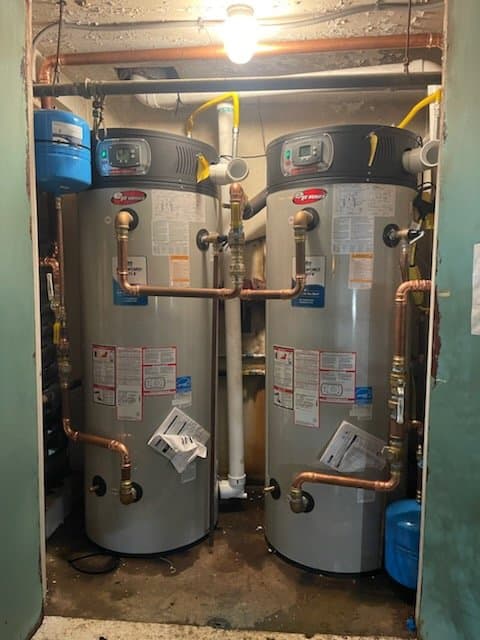
Replace or Repair? Signs Your Water Heater Is Done
September 7, 2026 · Alpha Omega Plumbing Inc
Almost every water heater can be repaired. That is the trap. A plumber can nearly always get hot water flowing again for a few hundred dollars, which makes the repair feel like the sensible choice right up until the third repair in two years, or the morning the tank splits and soaks the closet floor. The honest question is not whether the unit can be fixed — it is whether fixing it buys you enough time to be worth the money. Below are the signs that answer it, the failures no repair survives, and how to tell where your heater sits on that line before it decides for you.
The Repair-or-Replace Math Most Homeowners Get Wrong
The rule of thumb worth remembering is simple: multiply the unit's age in years by the quoted repair cost. If the result is more than the price of a new heater installed, replace it. A $250 thermostat swap on a four-year-old tank is an easy yes. The same $250 on an eleven-year-old tank is $2,750 against a replacement — and the tank is going to fail anyway within a year or two, at which point you have paid for both.
What skews the math in Hawai'i is what a replacement actually costs here. Shipping a unit across the Pacific and the labor to install it push the total above mainland figures, so homeowners anchor on a number they read online, decide replacement is out of reach, and keep buying repairs. Get a real installed quote before you make that call. Once you can see both numbers side by side, the decision usually makes itself.
The second thing the math misses is what a failure costs when it happens on its own schedule. A tank that lets go while you are at work floods whatever is beneath it — drywall, flooring, cabinets, sometimes a downstairs ceiling — and that damage routinely runs several times the price of the heater. A planned swap is a scheduled morning. An unplanned one is a claim.
Failures a Storage Tank Never Recovers From
Some water heater problems are component problems, and components are replaceable. Thermostats, heating elements, gas valves, thermocouples, pressure relief valves, dip tubes — all of these can be swapped without touching the tank, and on a reasonably young unit they are worth doing.
One failure is different: a leaking tank. If water is seeping from the body of the heater rather than from a fitting or a valve, the steel shell has corroded through from the inside, and there is no repair for that. Welding a pressurized potable water vessel is not a thing anyone does. A weep at the seam today becomes a split seam later, usually without warning, and the volume that comes out is the full tank plus whatever the supply line keeps feeding it. Find water under the unit, shut off its cold supply, and plan a replacement rather than a service call.
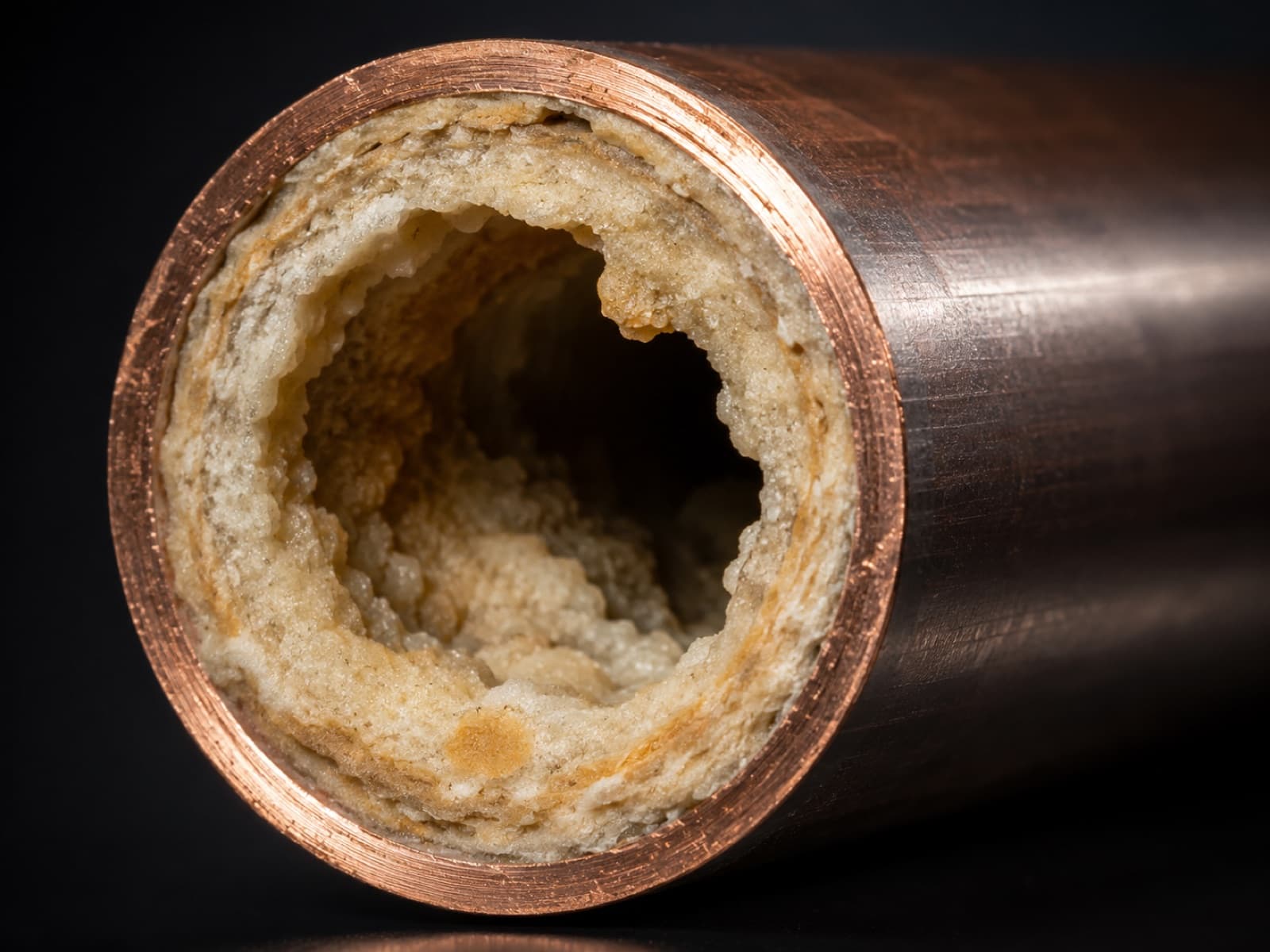
Rust-colored hot water is the same story one stage earlier. When hot runs tinted and cold runs clear, the discoloration is coming from inside the tank — the sacrificial anode rod is spent and the steel underneath has started to go. Replacing the anode on a young tank stops the process. On a tank already past ten years, the rust is telling you the corrosion has a head start you will not catch up to. Rumbling or popping while the burner runs points the same direction: that is a hardened sediment bed on the tank floor, common on O'ahu's mineral-heavy water, cooking the steel above it every cycle.
How to Read Your Unit's Real Age Off the Serial Number
Age changes the weight of every symptom above, and most homeowners have no idea how old their heater is — it was there when they bought the house. You do not need the paperwork. The manufacture date is encoded in the serial number on the rating label, usually in the first four characters, and nearly every major brand publishes the key. Rheem and Ruud lead with month and year, so 0817 is August 2017. A. O. Smith and State use a four-digit year-week. Bradford White uses a two-character letter code. Search the brand plus "serial number date code" and you will have the answer in a minute.
Once you know the age, the picture clarifies. Under eight years, repair almost anything short of a tank leak. Eight to twelve, weigh each repair against the math above and expect the answer to tip toward replacement as the number climbs. Past twelve on a tank unit, you are on borrowed time, and any significant repair is money spent on an appliance that owes you nothing. Our guide on how long a water heater lasts in Hawaii covers why island conditions tend to trim the upper end of those ranges.
There is one more reason to look the age up now rather than during a failure: it tells you when to start budgeting. A homeowner who knows the tank turned ten last spring can put money aside and shop deliberately. A homeowner who finds out on the day it fails takes whatever unit can be delivered and installed that afternoon.
Choosing the Right New System Instead of Matching the Old One
A replacement is the one moment you can change what your home runs on without paying twice, so it is worth thirty minutes of thought rather than defaulting to whatever is in the closet now. If your household regularly runs out of hot water, a bigger tank or a switch to on-demand solves a problem you have been living with for years. If it never runs out, do not pay to heat capacity you do not use.
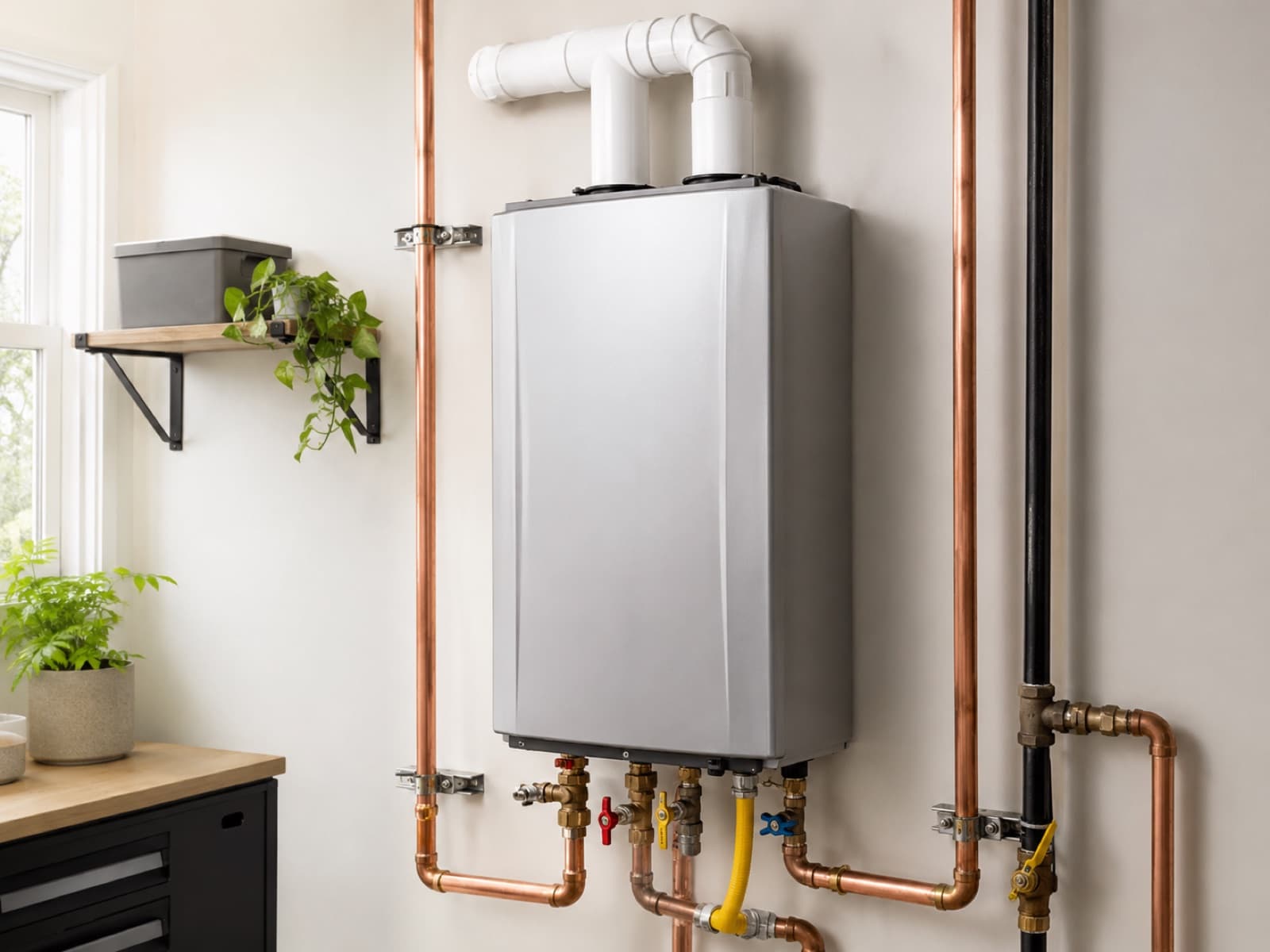
The three realistic paths on O'ahu are a conventional tank, tankless, and solar with a backup element. Tanks are cheapest to install and simplest to service. Tankless costs more up front, takes more room in the wall and the gas or electrical supply, and lasts considerably longer while heating only what you draw. Solar makes obvious sense given the sun here and the rebates available through the Board of Water Supply and Hawaiian Electric, though the storage tank still ages like any other. Our comparison of tankless and traditional water heaters walks through the trade-offs with island utility rates in mind.
One thing worth doing at the same time regardless of what you install: address the water going into it. Scale is what killed the last unit, and a new tank in the same water on the same schedule ages the same way. Pairing a replacement with whole-home filtration or softening is the cheapest form of insurance on the new appliance you will ever buy.
Swapping on Your Schedule, Not the Tank's
A straightforward tank-for-tank replacement is a half-day job: drain and haul out the old unit, set and level the new one, reconnect water, gas or power, fit new flex connectors and a fresh pressure relief discharge line, refill, purge the air, and fire it. Changing type — tank to tankless, or adding solar — takes longer because venting, gas sizing, or roof work enters the picture. Either way it is a morning you choose, not an emergency you absorb.
The difference between the two is entirely a matter of when you make the call. Homeowners who book water heater replacement on O'ahu while the old unit is still limping get to compare quotes, pick the right size, and have someone laying protective covering across the hallway floor. The ones who wait are calling for an emergency plumber with a wet-vac running in the background, and the water damage has already outrun the cost of the heater.
If your unit is over ten years old, running rusty, making noise, or has already had one repair this year, get eyes on it before it forces the issue. Alpha Omega Plumbing has been installing and servicing water heaters across Honolulu, Kailua, Pearl City, Mililani and the rest of the island since 2014, and we will tell you plainly when a repair is the better buy — we would rather fix a five-year-old heater than sell you one you do not need yet. Call (808) 847-5414 for a free estimate and a straight answer.
Frequently Asked Questions
Should I repair or replace my water heater?
Multiply the heater's age in years by the repair quote — if that number exceeds the installed price of a new unit, replace it. A leaking tank is always a replacement regardless of age, because a corroded shell cannot be repaired. Alpha Omega Plumbing will give you both numbers before you decide, at (808) 847-5414.
How much does a new water heater cost on O'ahu?
It depends on the type, the capacity, and whether the install is a straight swap or a change of system, and Hawai'i's shipping and labor rates run above mainland averages. Rather than guess from an online figure, get a real installed quote — Alpha Omega Plumbing provides free estimates at (808) 847-5414.
Why does my hot water look rusty but my cold water is clear?
The discoloration is coming from inside the tank, which means the anode rod has been consumed and the steel is corroding. On O'ahu, mineral-heavy water and coastal humidity accelerate that process. On a heater under about eight years old a new anode rod can halt it; on an older unit it is a signal to plan a replacement.
Is a small puddle under my water heater an emergency?
If it is coming from a fitting or the relief valve, it is a repair. If it is seeping from the body of the tank, treat it as urgent — shut off the cold supply above the unit and call a plumber, because a corroded tank can release its entire contents at once. Alpha Omega Plumbing answers around the clock at (808) 847-5414.
Learn more about our Water Heater Services services on Oʻahu
water heater replacement on O'ahu →Alpha Omega Plumbing Inc
Serving all of O'ahu since 2014.
More From the Blog

Need a Plumber on O'ahu?
Insured and available 24/7 for emergencies across the island.