
How Much Does Cesspool Conversion Cost in Hawai'i?
November 5, 2026 · Alpha Omega Plumbing Inc
Cesspool conversion in Hawai'i generally costs about $25,000 to $50,000 per home, based on recent public estimates, and a difficult lot can run well past that. A sewer connection close to the house can cost far less, while a tight, rocky or flood-prone property can cost far more. Those numbers are published estimates, not a quote, because the real price depends on your lot. Here's what each conversion path tends to cost, what pushes a job up or down, and what help exists for paying for it.
Typical Price Ranges for Replacing a Cesspool
The cost numbers you'll see vary a lot, and the date on them matters. When the Department of Health estimated the statewide bill in 2017, it assumed about $20,000 per conversion. By 2023, a figure presented to the state's Cesspool Conversion Working Group ran from about $10,000 to $38,000 or higher, depending on the site. More recently, people working on the issue have told Hawai'i reporters to expect $25,000 to $50,000 or $30,000 to $50,000 per home.
Real bids back that up. In 2024, Civil Beat reported bids of $32,000 to $54,000 for a single Kaua'i property, and a resident in a flood zone expecting $60,000 to $100,000. Those aren't O'ahu jobs, but they show how far apart two conversions can land, even on the same island.
So a sensible planning number for a standard septic conversion is the mid-$20,000s at the low end and $50,000 at the upper end, with room above that if your lot is difficult. Treat any single figure you read online, including these, as a starting point.
Sewer Hookup, Septic Tank or Aerobic Unit: How the Options Compare
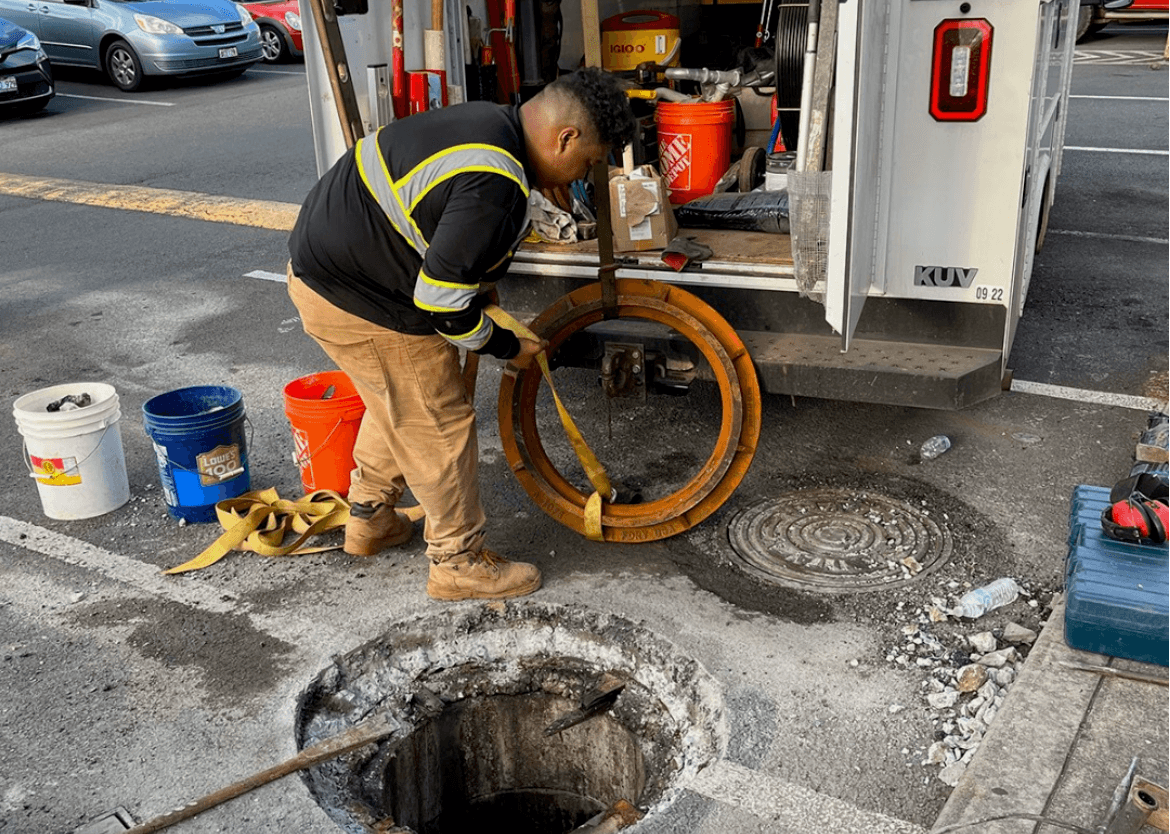
A sewer connection is usually the cheapest route when a main already runs along your street. In 2024, Honolulu officials were discussing figures of about $8,500 to $10,000 per home, though the price climbs with the distance from the house to the main, the depth of the line, and whatever has to be cut through and restored along the way, like a driveway. If there's no main nearby, this option isn't really yours to choose.
A conventional septic system is the usual answer where sewer doesn't reach, and it's the option most of the estimates above describe. You're paying for the tank, the leach field, the digging, the design and permit work, and closing the old cesspool. Our septic system services cover that work, and the leach field is often where the budget moves most, since it needs enough suitable soil on your lot.
An aerobic treatment unit generally costs more up front than a standard tank and adds ongoing costs, because it runs on electricity and needs regular servicing. It's often chosen because a lot can't fit or support a conventional leach field, so compare it on what fits your property, not just on price.
What Pushes a Conversion Bid Up or Down on O'ahu
Most of the price is decided underground and by the shape of the lot. These are the factors that move a bid the most:
Soil and rock. Coral, lava rock and hard clay all change how a job is dug and how large the leach field has to be. A soil percolation test tells the designer how well the ground absorbs water, and poor results can mean a bigger field or a different system.
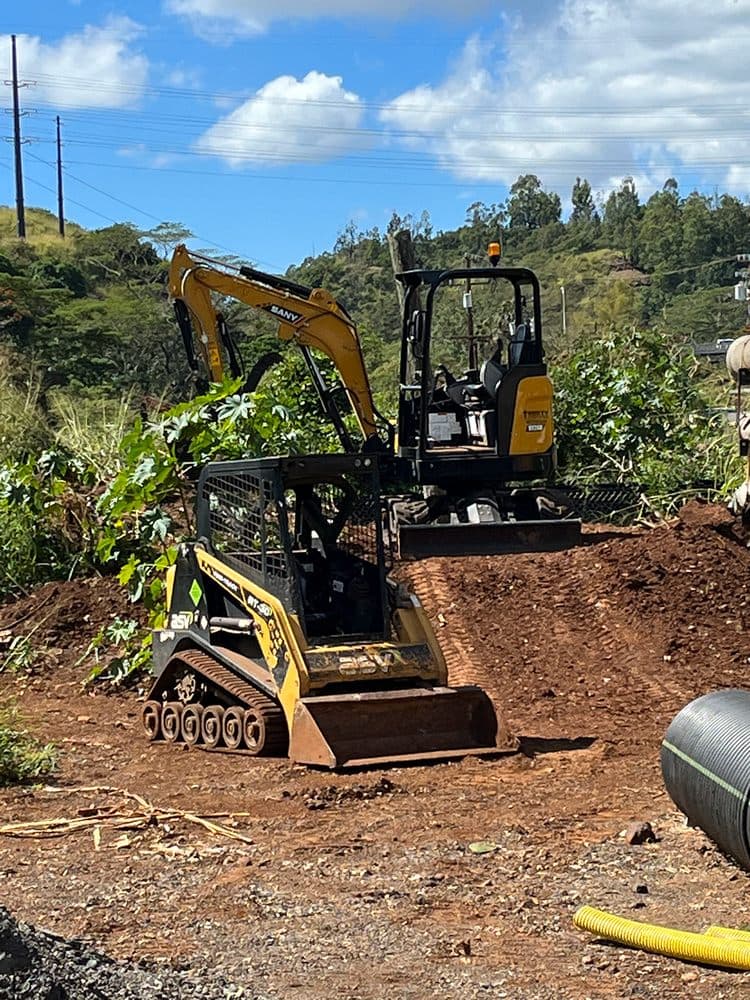
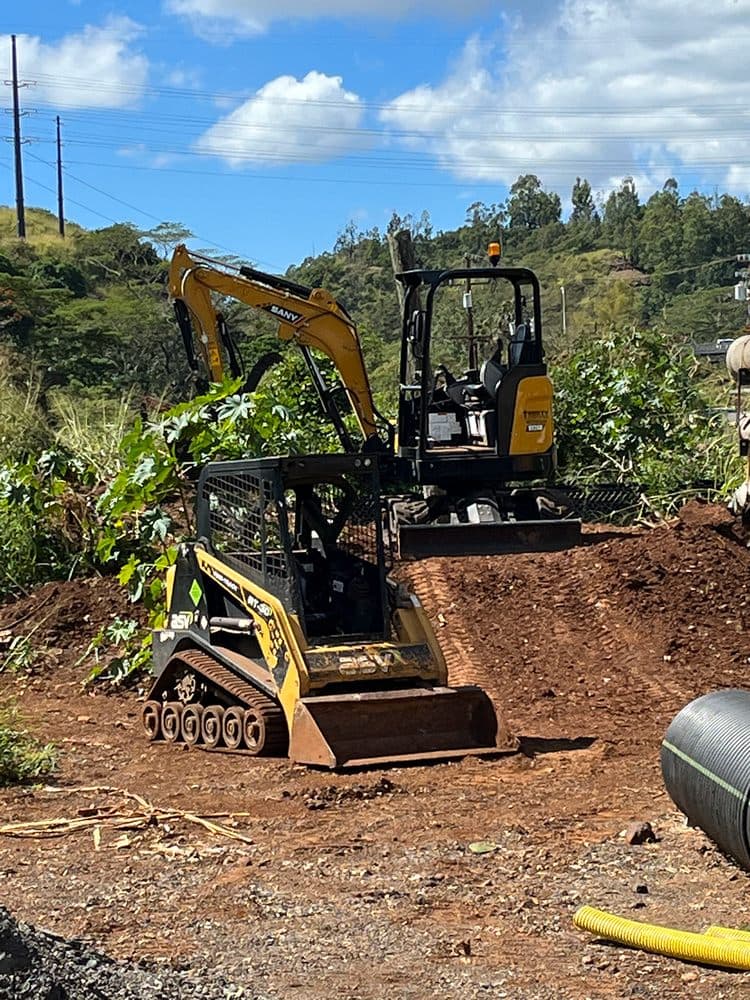
Access. Older O'ahu neighborhoods often have narrow side yards, retaining walls and tight driveways. If an excavator can't reach the back of the lot, smaller equipment and more labor take over. That's common in older parts of Kaimukī and Kāne'ohe, and it's why excavation services can make up a large share of a bid.
Lot size and water. Small lots, steep slopes and high water tables near the shoreline limit where a system can go. Coastal homes in places like Waimānalo, Hau'ula and along the Wai'anae coast can face groundwater close to the surface, which can rule out a simple design. Flood zones can add cost as well.
Restoration. Budget for putting the yard back afterward. Lawn, landscaping, concrete and fencing aren't always included in the base price, so ask whether a bid covers them. A clear scope is the only way to compare two bids fairly.
Permit, Design and Closure Costs to Budget For
The tank and the digging aren't the whole bill. A new system needs a design for your specific lot and approval from the Department of Health's Wastewater Branch before work begins, so expect design and permit fees, plus the soil testing that goes with them. The old cesspool also has to be pumped out and properly closed, which is a separate line item on many bids.
Then there's the running cost. A septic tank still needs routine cesspool and septic pumping, typically every few years, while an aerobic unit adds a service plan. A cesspool that needs pumping often is already costing you money, so that's worth weighing when you compare the price of acting now against waiting. For the legal timeline, see our post on the 2050 cesspool deadline.
Ways to Pay for an Upgrade: Loans and Grants
Help is coming, but it isn't fully here yet. Act 120 of the 2026 legislative session created a statewide revolving loan program for low-interest or forgivable loans, which can also be used to connect to sewer. The Hawai'i Green Infrastructure Authority will run it, the program is aimed at low- and moderate-income households, and its first $2 million won't stretch far. Hawai'i Public Radio reported that Honolulu is adding $625,000 and that O'ahu residents who apply before 2030 could qualify for zero-percent loans, but final terms hadn't been published when we wrote this.
The older programs have ended. The state's $10,000 tax credit covered 2016 to 2020, and the $20,000 pilot grant from 2023 is listed as completed. The current $20,000 grant round is for Kaua'i County only. Check the Department of Health's financial support programs page before you budget around any of these, since it's where new details will be posted.
Getting a Real Number for Your Property
The only number that counts is one based on your lot. Start by confirming that you have a cesspool, finding out whether sewer is available on your street, and locating the old pit. When you collect bids, make sure each one spells out design, permits, closure of the cesspool and yard restoration, so you're comparing the same job.
Alpha Omega Plumbing has handled cesspool and septic work across O'ahu since 2014. Call 808-847-5414 for a free estimate, and we'll look at your property and give you a straight answer on what it's likely to need.
Frequently Asked Questions
How much does it cost to convert a cesspool to a septic system in Hawaii?
Converting a cesspool to a septic system in Hawai'i generally costs about $25,000 to $50,000, based on recent public estimates. Difficult lots can cost more, and the real price depends on your soil, access and system size. Alpha Omega Plumbing offers free estimates at 808-847-5414.
Is connecting to sewer cheaper than installing a septic system?
Connecting to sewer is usually cheaper when a main already runs close to your home. Honolulu officials have discussed about $8,500 to $10,000 per home, but a long or deep run costs more, and the option only exists where sewer is available.
Is there financial help for cesspool conversion on Oahu?
Yes, a state loan program created by Act 120 of 2026 is being set up, though it wasn't taking applications at the time of writing. O'ahu residents who apply before 2030 may qualify for zero-percent loans, so check the Department of Health's support programs page for current terms.
Why do cesspool conversion quotes vary so much?
Quotes vary because each lot differs in soil, rock, access, size and groundwater depth. Bids may also include or leave out design, permits, cesspool closure and yard restoration, so compare the scope line by line and not only the total.
Will it cost more if I wait until my cesspool fails?
Waiting can cost more because a failed cesspool leaves you little time to plan or compare bids. You may also pay for repeated pumping or cleanup in the meantime, while planning ahead gives you time to line up financing. Alpha Omega Plumbing can review your options at 808-847-5414.
Learn more about our Septic System Services services on Oʻahu
septic system services →Alpha Omega Plumbing Inc
Serving all of O'ahu since 2014.
Need a Plumber on O'ahu?
Insured and available 24/7 for emergencies across the island.