
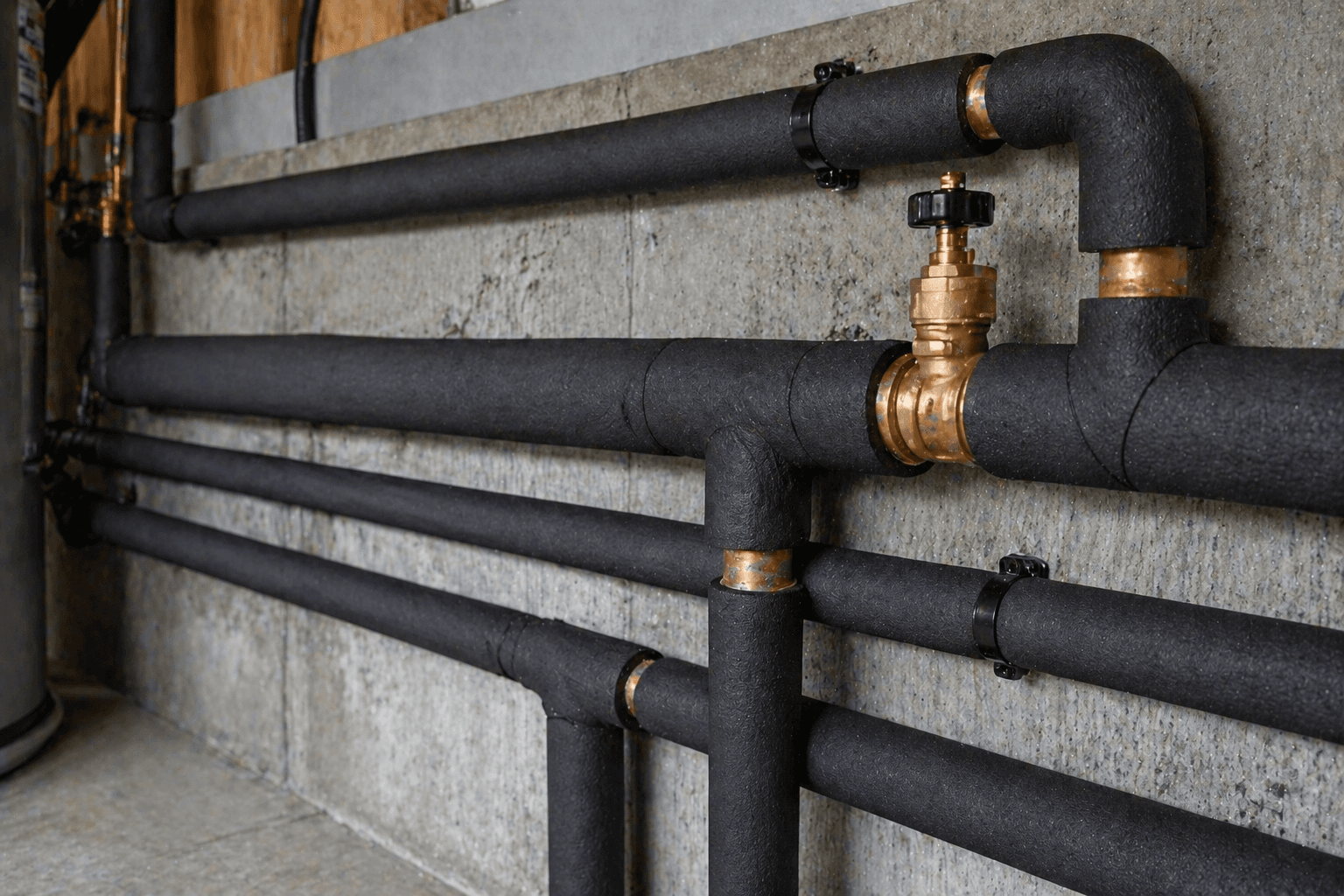
Pinhole Leaks in Copper Pipes: Why They Happen in Hawai'i
November 2, 2026 · Alpha Omega Plumbing Inc
Pinhole leaks in copper pipes happen when corrosion eats through the pipe wall from the inside or outside, usually at a single tiny spot, until water sprays or seeps out. The usual causes are water chemistry, high water velocity, thin-walled pipe, poor installation and, on O'ahu, salt air and pipes buried in concrete slabs. A single pinhole is rarely a one-off: it is often the first sign that the same length of copper is thinning in other places too. Here's why copper pipe corrosion shows up in Hawai'i homes, how to spot it early, and how to decide between a spot repair and a bigger fix.
What Causes Pitting Corrosion in Copper Plumbing
Copper normally protects itself with a thin oxide layer on the inside of the pipe. Pitting corrosion starts when that layer breaks down in one small spot instead of wearing evenly. The exposed copper corrodes faster than the pipe around it, and the pit digs deeper and deeper until it breaks through the wall. From the outside the pipe can look perfectly fine right up until the drip starts.
Several things can trigger that breakdown. Water that is slightly acidic, high in dissolved oxygen, or carrying sand and fine sediment can attack the protective layer. Water moving too fast, which happens with undersized pipe, sharp turns, high household pressure or a hot water recirculation pump running constantly, scours the inside of elbows and tees in a pattern plumbers call erosion corrosion. Hot water lines tend to fail first because heat speeds up every one of these reactions.
Installation matters too. Leftover soldering flux inside a joint can keep eating at the copper for years, and burrs left on a cut pipe create turbulence right where the water enters a fitting. Copper touching galvanized steel or other metals without a proper dielectric fitting can corrode at the connection, and a home's electrical system grounded through the water line can add stray current that accelerates the damage.
Island Conditions That Speed Up Water Pipe Wear
Some of the causes are specific to living on an island. Salt air near the coast in places like Kailua, Hawai'i Kai, 'Ewa Beach and Waimānalo corrodes exposed copper from the outside, especially pipe runs under the house, along exterior walls and in open carports. You'll often see green or white crust on the pipe before it starts to weep.
Many O'ahu homes are built slab-on-grade, with copper water lines running through or under the concrete. Soil moisture, movement in the slab and contact with concrete and fill can corrode those lines from the outside, which leads to slab leaks that are hard to see and expensive to ignore. Older homes and condos from the 1960s through the 1980s also commonly used Type M copper, the thinnest wall thickness sold for household water lines, so there is less metal to lose before a pinhole appears.
Age is the last piece. Copper can last for decades, but in a building where the plumbing is 40 or 50 years old and has already had a few leaks, the remaining pipe has usually been exposed to the same conditions for just as long.
Early Signs of a Tiny Water Line Leak
Pinhole leaks are small, so the first clues are often indirect. Look for a water bill that creeps up with no change in use, a damp spot or stain on drywall or ceiling, bubbling paint, a musty smell in a closet, or a warm spot on a tile floor that can point to a hot water line leaking in the slab. Under sinks and behind the water heater, check copper for green or blue-green spots, crusty white deposits and tiny beads of water.
A simple test is to turn off every fixture and watch the water meter. If the dial or the leak indicator keeps moving, water is going somewhere. Our guide on finding a hidden water leak walks through the meter check step by step.
When the source isn't obvious, professional leak detection uses pressure testing, acoustic listening equipment and thermal imaging to pinpoint the spot without opening up walls or floors at random.
Patch, Reroute or Repipe? Choosing the Right Fix
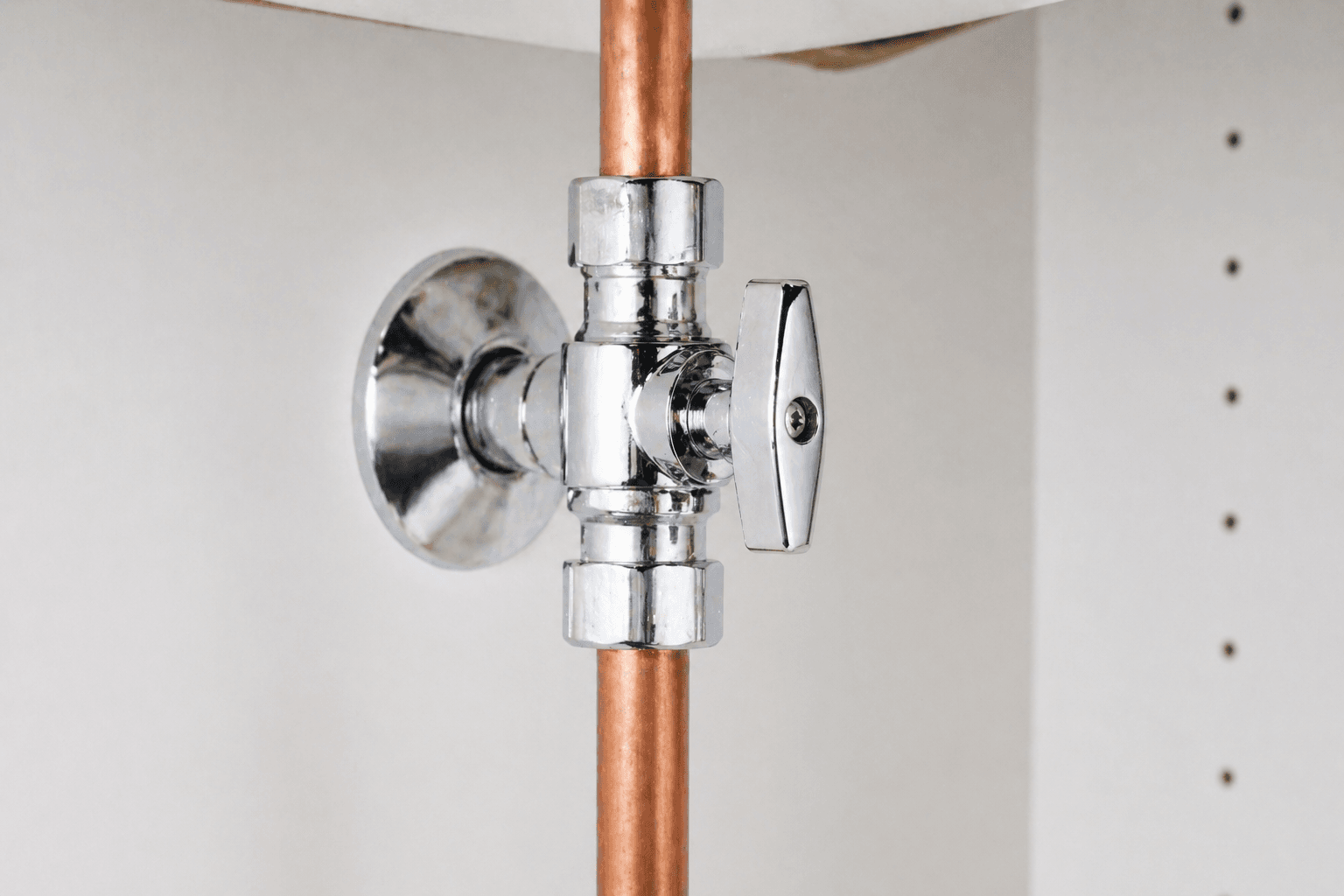
A first pinhole in an otherwise healthy system can usually be fixed by cutting out the damaged section and soldering or press-fitting in new pipe. That's a reasonable choice when the pipe on either side looks solid and the leak has a clear cause, like a single fitting near a pump.
It's a different story when leaks keep showing up. Two or three pinholes in a year or two, especially on the same hot or cold line, usually means the pipe wall is thin along much of its length, and every patch just moves the next failure a few feet down the line. For leaks under a slab, rerouting the line through the walls or attic is often cleaner than breaking up the floor to reach it.
When the copper is corroding throughout the house, whole-home repiping with new copper or PEX is usually the fix that actually ends the cycle of leaks, water damage and drywall repairs. Correcting the cause matters too, such as lowering high water pressure with a regulator, slowing an oversized recirculation pump or adding proper dielectric fittings, so the new pipe doesn't fail the same way.
What to Do When You Find a Pinhole Leak
Shut off the water at the main valve or the fixture's shutoff, and put a towel or bucket under the drip. A repair clamp or a wrap of rubber and a hose clamp from the hardware store can slow a small leak until it's fixed, but treat it as a temporary patch, not a repair. Dry the area quickly, because O'ahu's humidity turns a damp wall cavity into a mold problem fast.
Then have the line looked at by someone who will check more than the one spot that's dripping. Alpha Omega Plumbing has handled plumbing leak repair across O'ahu since 2014, from single pinholes to slab leaks and full repipes. Call 808-847-5414 and we'll find the leak, check the condition of the pipe around it and give you honest options before any work starts.
Frequently Asked Questions
What causes pinhole leaks in copper pipes?
Pinhole leaks are caused by pitting corrosion that eats through the pipe wall at one small spot. Common triggers include aggressive water chemistry, high water velocity, leftover soldering flux, thin-walled pipe, contact with other metals and, on O'ahu, salt air and pipes buried in concrete slabs.
How much does it cost to fix a pinhole leak in Hawai'i?
A single accessible pinhole is usually a modest spot repair, while slab leaks, reroutes and whole-home repiping cost considerably more. O'ahu labor and material costs run higher than the mainland, and the price also depends on how much wall or floor has to be opened. Call Alpha Omega Plumbing at 808-847-5414 for a free estimate.
Why do O'ahu homes get so many copper pipe leaks?
O'ahu homes face a combination of salt air near the coast, copper lines run through concrete slabs, and aging Type M copper in many older homes and condos. Each of those wears copper faster, so pinhole leaks are a common repair here.
Should I repipe after one pinhole leak?
Not usually, since one pinhole with a clear cause can often be fixed with a spot repair. If you've had two or three leaks in a year or two, the rest of the pipe is likely thinning too, and repiping is often the more cost-effective choice.
Can I fix a pinhole leak myself?
You can slow a small pinhole with a repair clamp until a plumber arrives, but a lasting fix means cutting out the damaged pipe and checking the pipe around it. Alpha Omega Plumbing can find every weak spot and repair it properly, so call 808-847-5414.
Learn more about our Plumbing Leak Repair services on Oʻahu
plumbing leak repair across O'ahu →Alpha Omega Plumbing Inc
Serving all of O'ahu since 2014.


Need a Plumber on O'ahu?
Insured and available 24/7 for emergencies across the island.