
Pipe Lining vs. Pipe Bursting: Trenchless Sewer Repair
November 19, 2026 · Alpha Omega Plumbing Inc
Pipe lining and pipe bursting both fix a damaged sewer line without trenching the whole yard, but they solve different problems. This guide explains how each trenchless method works, when one makes more sense than the other, and how a camera inspection settles the choice for O'ahu homes and businesses.
The difference between pipe lining and pipe bursting comes down to the condition of the old pipe. At Alpha Omega Plumbing Inc in Honolulu, Hawaii, we line a sewer pipe that is cracked, leaking or root-invaded but still holding its shape, and we burst and replace a pipe that has collapsed, crumbled along its length or needs to be larger.
How Does Cured-in-Place Pipe Lining Work?
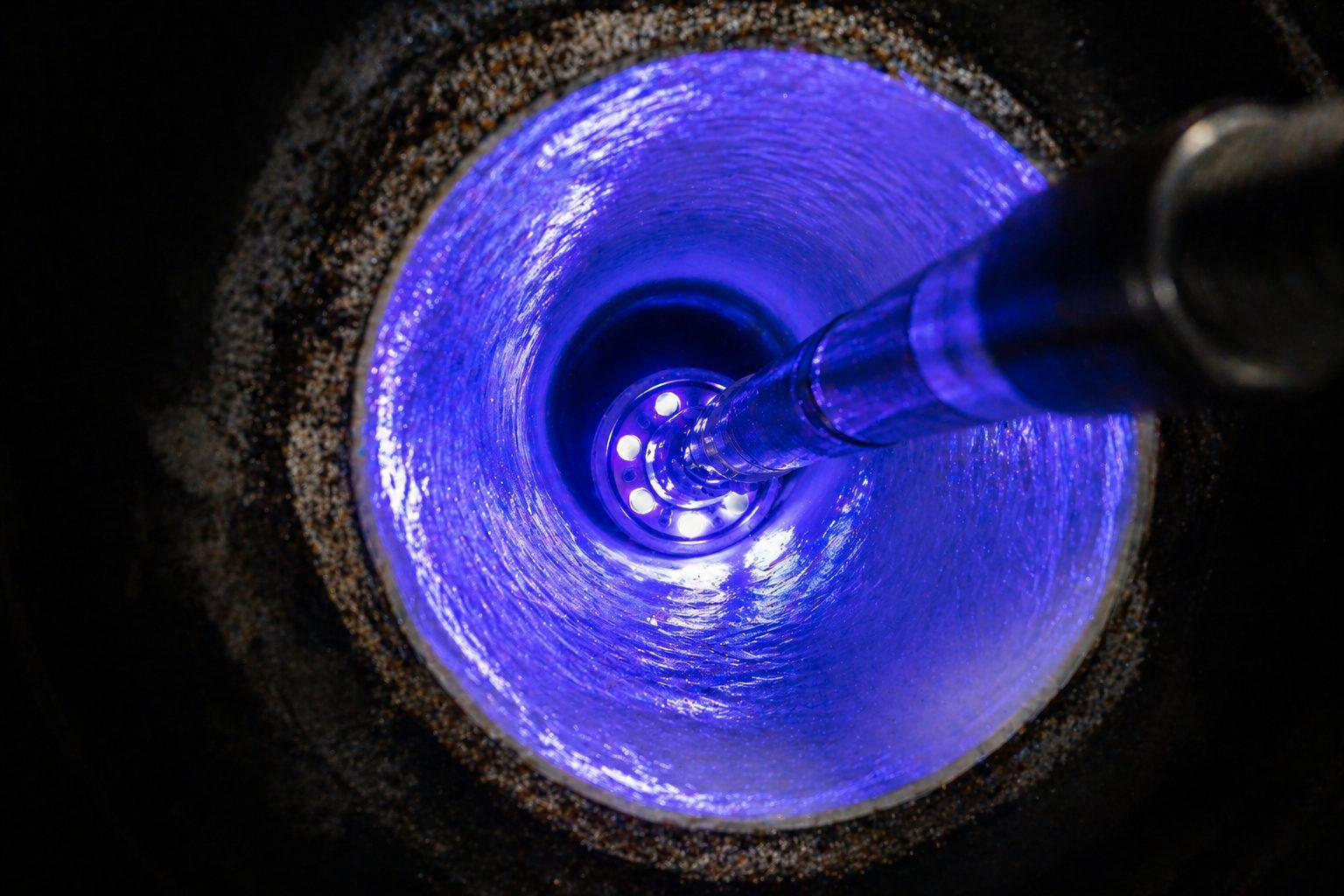
Cured-in-place pipe (CIPP) lining builds a new pipe inside the old one. We clean the line first so the liner can bond to the pipe wall, then position a fiberglass liner saturated with resin over the damaged section. With our LightRay UV pipe lining system, UV light cures that liner hard in about 10 to 15 minutes, leaving a seamless, jointless pipe with no gaps for roots to find.
The liner adds only about 6 to 8 millimeters to the pipe wall, and because the inside is now smooth instead of rough and corroded, flow often improves. CIPP liners are designed for a 50-year service life, and most residential lining jobs are finished in a single day. Lining is usually the right call when the camera shows:
- Cracks or leaks in pipe that is otherwise still solid
- Root intrusion at the joints
- Separated, offset or failing joints
- Corroded or pitted walls inside older cast iron or clay lines
What Is Pipe Bursting and When Is It Needed?
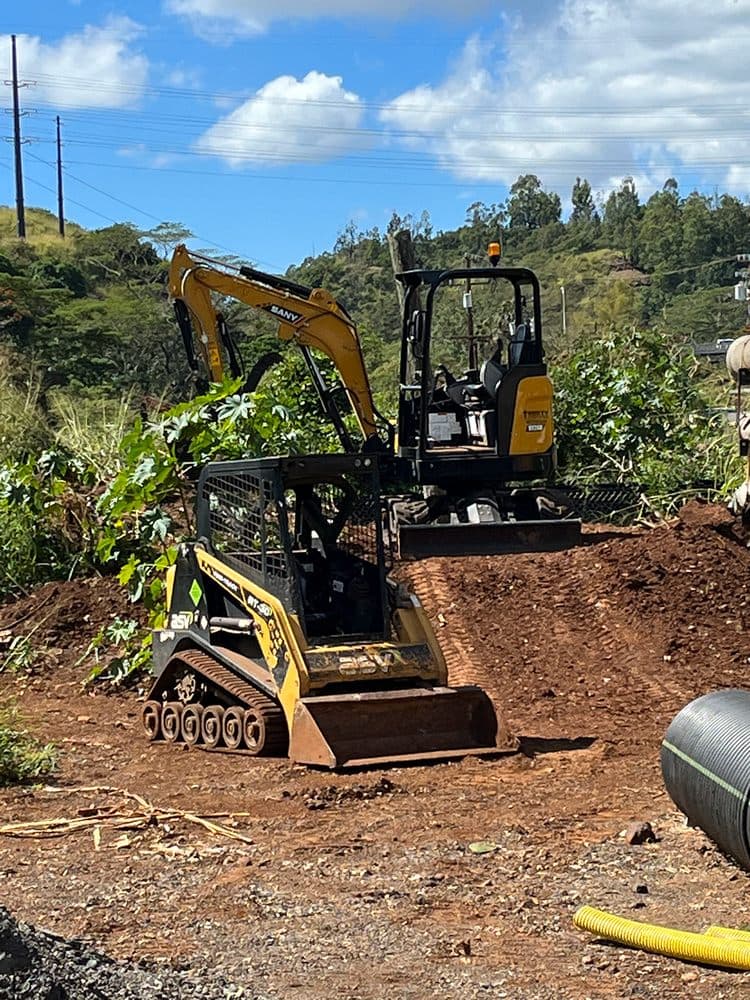
Pipe bursting replaces the old sewer line entirely by breaking it apart underground and pulling new pipe in behind it. We dig a small entry pit and exit pit, then pull a bursting head through the existing line. The head fractures the old pipe outward into the surrounding soil while new HDPE pipe follows directly behind, so the fragments stay buried and the new line takes the same path.
Bursting is the tool for a line too far gone to hold a liner: a collapsed section, a cast iron run deteriorated from end to end, or root damage along the whole length. It can also upsize the line during the burst. HDPE pipe is rated to last 100-plus years and does not corrode, and a typical residential run of 50 to 100 feet is usually done in one day. See how we handle pipe bursting on O'ahu.
Lining or Bursting: Which No-Dig Method Fits Your Line?
The pipe's structural condition decides it: lining rehabilitates a pipe that still holds its shape, and bursting replaces one that doesn't. Here is how the two compare side by side.
| Factor | Pipe lining (CIPP) | Pipe bursting |
|---|---|---|
| What it does | Builds a new pipe inside the old one | Breaks the old pipe and pulls in new pipe |
| Best for | Cracks, roots, leaking joints, corrosion | Collapsed or fully deteriorated pipe |
| Digging | None in most cases | Small entry and exit pits |
| Pipe size after | Slightly smaller (6 to 8 mm wall) | Same size or larger |
| New material | Resin-cured fiberglass liner | HDPE pipe |
| Rated service life | 50-year design life | 100+ years |
| Typical home job | One day | One day for a 50 to 100 ft run |
Why Every Sewer Line Repair Starts With a Camera
A sewer camera shows which method your line can take before anyone quotes a price. Fully collapsed sections, some older clay pipe and certain pipe layouts still need a traditional excavated repair, and we would rather tell you that up front than sell you a liner that won't hold. Every trenchless job we do follows the same order:
- Run a video camera inspection to map the damage, measure the pipe and confirm it can be lined or burst.
- Clean the line with hydro jetting or mechanical cleaning to clear roots, scale and grease.
- Install the liner or burst in the new pipe.
- Run the camera again to confirm full coverage, smooth walls and proper flow before we leave.
Why No-Dig Repair Matters More on O'ahu
Avoiding a full dig pays off more here than on the mainland. Coral and volcanic substrate make excavation slow and costly, and many sewer laterals in Honolulu, Kailua and Pearl City run under driveways, lanai slabs and mature landscaping. A video camera inspection and a clean line from hydro jetting are what make a no-dig repair possible.
If roots keep coming back, our guide to tree roots in your sewer line covers the warning signs, and hydro jetting vs. drain snaking explains how we clear a line before lining it.
The Bottom Line on Lining and Bursting
Pipe lining fixes a sewer pipe that is damaged but still in shape, and pipe bursting replaces one that has collapsed or failed along its length. Both avoid trenching your yard, and a camera inspection tells you which one your line needs.
Alpha Omega Plumbing handles trenchless pipe repair for homes and commercial properties across O'ahu. Call 808-847-5414 for a camera inspection and a free estimate.
Frequently Asked Questions
Is pipe lining or pipe bursting cheaper?
It depends on the length and condition of the line, so the honest answer comes after a camera inspection. Lining a damaged section of sound pipe is often less work than replacing a whole run, while bursting can beat repeated spot repairs on a pipe that is failing everywhere. Both are frequently cheaper than excavation once concrete and landscaping repair are counted. Call Alpha Omega Plumbing at 808-847-5414 for a free estimate.
How long does a trenchless sewer repair take?
Most residential trenchless sewer repairs are finished in one day. A LightRay liner cures in about 10 to 15 minutes once it is in place, and a typical 50 to 100 foot pipe bursting run is usually done in a day, with longer commercial runs taking two.
Can a collapsed sewer pipe be lined?
No, a fully collapsed section cannot hold a liner. Pipe bursting can often replace it instead, depending on how much of the line has collapsed and the soil conditions, and some cases still need excavation.
Will pipe lining make my sewer pipe smaller?
Only slightly. The liner adds about 6 to 8 millimeters to the pipe wall, and because the new surface is smooth instead of rough and corroded, flow often improves after lining.
How long do lined and burst pipes last?
CIPP liners are designed for a 50-year service life, and the HDPE pipe used in pipe bursting is rated to last 100-plus years. In most cases either repair will outlast the original pipe it fixed or replaced.
Do I need to leave my house during a trenchless sewer repair?
Usually not. Sewer service is shut off for a few hours while the liner cures or the new pipe is set, and most homeowners on O'ahu have service back the same day.
Learn more about our Trenchless Pipe Repair services on Oʻahu
trenchless pipe repair →Alpha Omega Plumbing Inc
Serving all of O'ahu since 2014.
Need a Plumber on O'ahu?
Insured and available 24/7 for emergencies across the island.