
5 Signs Your Septic System Is Starting to Fail
September 3, 2026 · Alpha Omega Plumbing Inc
A septic system almost never fails without warning. It gives you months, sometimes a couple of years, of small signals first — drains that take a beat longer, a smell near the yard on a still afternoon, a pump-out that buys you less time than the last one did. Homeowners tend to treat those as separate annoyances instead of one story. They are one story. Here are the five signs that a septic system on O'ahu is heading toward failure, in the order they usually show up, and what each one is actually telling you about the tank or the ground underneath it.
Sign One: Every Drain in the House Slows at the Same Time
A single slow fixture is a fixture problem. Hair in the shower trap, grease in the kitchen line, a toy in the toilet — that is a local blockage, and it stays local. What matters for septic is when the whole house slows together: the kitchen sink drains lazily, the tub takes its time, the toilet's bowl drops slowly and refills slowly, and the washing machine starts backing up into the laundry tub on the discharge cycle. That pattern means the restriction is downstream of everything, out where the house line meets the tank.
Two things cause it: either the tank is full enough that liquid has nowhere to go, or the outlet to the drainfield is blocked and the tank is backing up behind it. From inside the house they feel identical. A pump-out and a look inside the tank tells you within twenty minutes which one you have, and whether the outlet baffle — the part that keeps floating scum out of the drainfield — is still where it belongs.
The reason this sign matters more than the others is timing. It is usually the first one to appear, and it appears while the system is still repairable. Homeowners who call for septic service on O'ahu at the slow-drain stage are almost always dealing with a pump-out and a component repair. Homeowners who wait until the next three signs stack up are frequently looking at ground work.
Sign Two: Gurgling Fixtures and a Sewage Smell Around the Property
Gurgling is the sound of air finding a path it should not need. In a healthy system, wastewater leaves and air moves freely through the vent stack on the roof. When the tank or the outlet is choked, air gets pushed back up the drain lines and comes out through the nearest water trap — which is why a flushed toilet makes the bathroom sink burp, or the shower drain bubbles when the washing machine empties. If you can trigger the gurgle in one fixture by running a different one, the system is telling you it cannot breathe.
The smell is the same problem with a different exit. Sewer gas is heavier than air and lingers low, so it collects around the tank lid, the cleanout cap, and the low corner of a yard rather than spreading evenly. On a windless, humid O'ahu afternoon it is unmistakable. Inside the house, a persistent sewage odor in one bathroom is more often a dried-out floor drain trap or a failed wax ring than a septic problem — but a smell that is strongest outdoors, over the tank or the field, is septic until proven otherwise.
Neither is something to live with. Sewer gas carries hydrogen sulfide and methane, so a system venting into a yard where children and pets play is a health issue and not just an unpleasant one. When the gurgling and the odor arrive together, the system has moved past the early stage.
Sign Three: Lush Green Grass and Soggy Ground Over the Leach Field
This is the sign people miss longest, because it does not look like a problem. A strip of lawn over the leach field turns noticeably greener and grows faster than everything around it, and the yard looks like it is thriving. What is actually happening is that partially treated effluent has risen close enough to the surface to fertilize the root zone — which means the soil below has stopped absorbing at the rate it was designed for.
The soggy stage follows. Ground over the field stays spongy for days after the rain has stopped and the rest of the yard has dried, or you find standing water and a wet-lawn smell in a rectangle that matches the shape of the field. Once effluent reaches the surface, the leach field is no longer treating waste — it is discharging it, and that puts untreated wastewater into the yard and eventually into the groundwater below.
O'ahu makes this worse than it would be on the mainland. Windward areas around Kāne'ohe and Waimānalo carry heavy annual rainfall and clay-rich soils that drain slowly, and many properties across the island sit close enough to sea level that the water table is already high. A field that would have another decade in it in a drier place gets loaded from both directions here — effluent from above, groundwater from below. Once the ground is saturated, the field cannot accept anything more no matter how empty the tank is.
Sign Four: Pump-Outs That Buy You Less Time Each Cycle
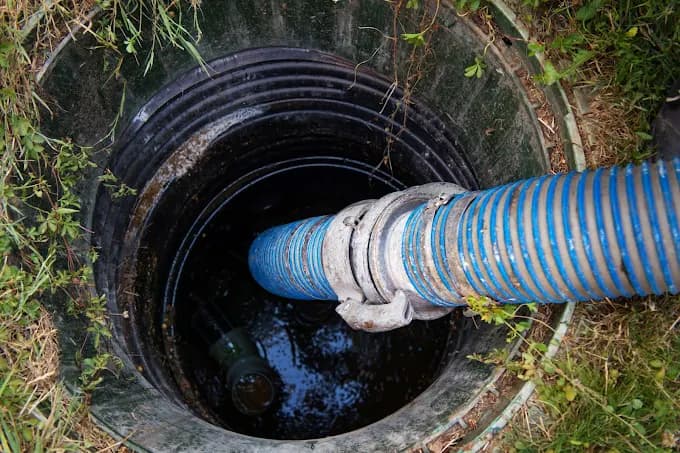
Keep the receipts, because the interval is the diagnostic. A typical household on O'ahu should get three to five years between pump-outs. If you were on a four-year rhythm, then it was three, then two, and now the tank is filling in eighteen months with the same number of people in the house, nothing about the tank has changed — the ground it drains into has. A tank fills faster when the effluent it should be releasing into the field has nowhere to go, so the liquid level stays high and the working volume shrinks.
Rule out the innocent explanations first. A household that grew by two people, a running toilet flapper adding hundreds of gallons a week, or roof runoff finding its way in through a cracked lid will all shorten the interval with nothing wrong in the ground. The toilet is the most common culprit and the easiest to check — a few drops of food coloring in each tank, left thirty minutes without flushing, shows you which one is passing water into the bowl.
If the household has not changed and nothing is leaking, shrinking intervals point at the field. At that point more frequent pumping is not maintenance, it is life support — you are paying to remove liquid the ground has stopped taking. That is the moment to get eyes on the outlet and the distribution box rather than book another truck.
Sign Five: Backups That Show Up Only After Heavy Rain
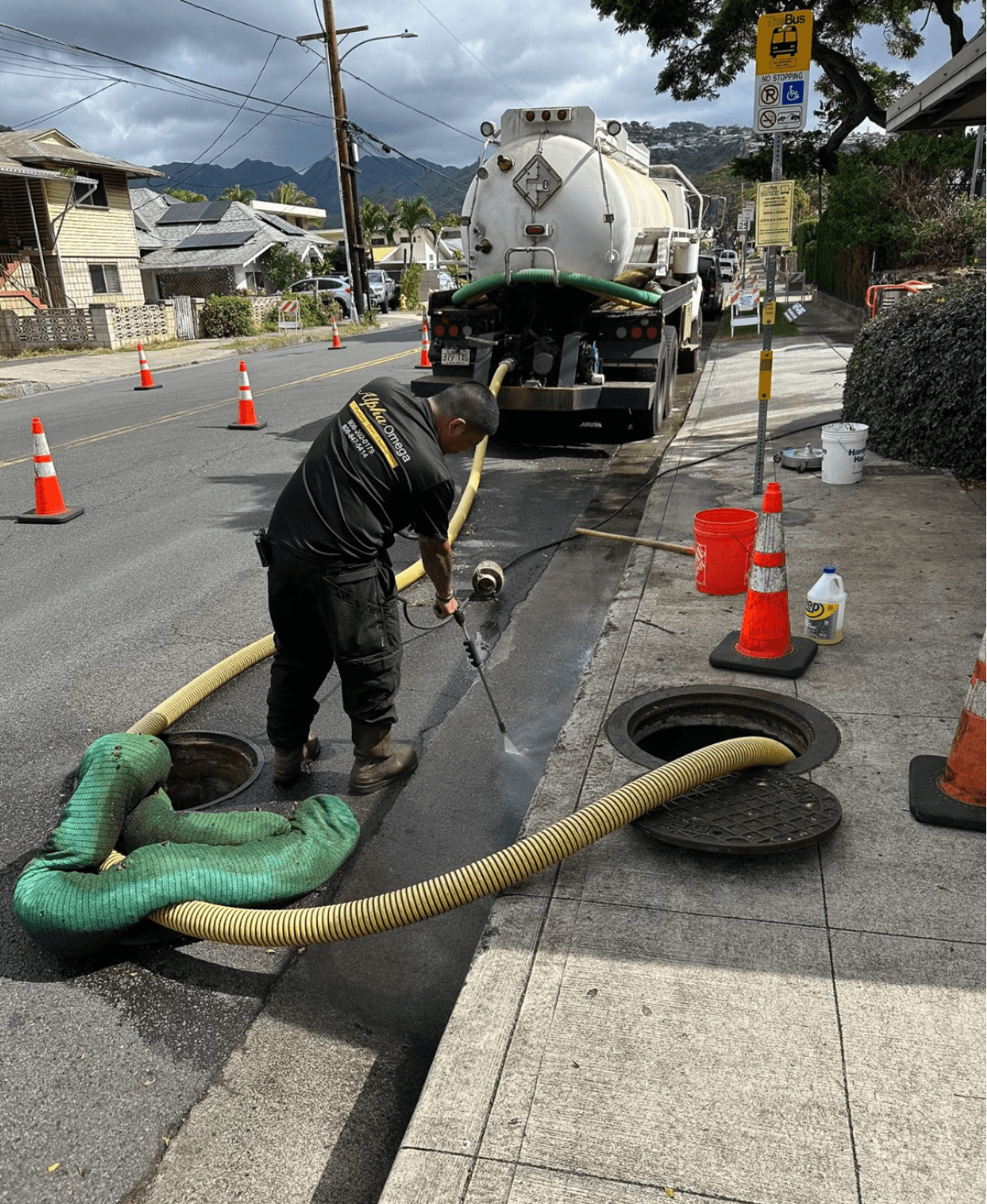
A system that behaves perfectly for weeks and then backs up in the middle of a Kona low is not a coincidence, and it is not the storm's fault. It means the leach field has so little absorption capacity left that ordinary rainfall is enough to saturate the soil and take away what remained. When the ground is already full of water, the field cannot accept effluent, and the backup arrives at the lowest fixture in the house — usually a ground-floor shower or a downstairs toilet.
The pattern gets misread constantly. The rain stops, the ground drains, the system works again, and the homeowner files it away as a weather event. But the failure window widens each season — first only the heaviest storms, then any sustained rain, eventually a normal week. Nothing recovers in between. The capacity is gone; the weather is only revealing it.
A failing field does not automatically mean a full replacement. A blocked outlet, a collapsed baffle, roots into a lateral, or a distribution box that has shifted and is feeding one line while the rest of the field sits unused all present exactly like field failure and are all fixable. A camera inspection of the lines and a look inside the distribution box separates those from genuine saturation before anyone opens ground.
What Happens Next, and When to Make the Call
Diagnosis runs in a set order and it is not expensive. Pump the tank so the levels read accurately, inspect the inlet and outlet baffles, camera the house line and the laterals, then check the distribution box for level and flow. That sequence tells you whether you are facing a component repair, a partial field repair, or a replacement — and guessing at the answer instead is what turns a repair into an excavation. Where ground genuinely does need opening, excavation and system replacement is a planned job rather than an emergency, provided you get to it before the field surfaces.
None of these signs fixes itself, and every one costs more the longer it runs. A tank pumped and a baffle replaced at the slow-drain stage is a routine service call. The same system two years later, with effluent surfacing in the yard, is ground work, permits, and a household living around it.
If you have noticed any of the five — the whole-house slowdown, the gurgle and the smell, the bright green stripe on the lawn, the shrinking pump-out interval, or the backup that only comes with the rain — get it looked at before the next one appears. Alpha Omega Plumbing services septic systems across O'ahu, from Honolulu and Pearl City through Kailua, Kāne'ohe and Waimānalo, and we are available 24/7 when a backup will not wait. Call (808) 847-5414 for a free estimate, and we will tell you straight whether you are looking at a repair or a replacement.
Frequently Asked Questions
How do I know if my septic tank is full or my drainfield has failed?
From inside the house they feel the same — slow drains, gurgling, backups. The difference shows in the yard and in the interval between pump-outs. A full tank empties and the problem goes away for years; a failed drainfield sends the tank back to full within months, and usually comes with soggy ground or unusually green grass over the field. Alpha Omega Plumbing can pump and inspect the tank to tell you which one you have — call (808) 847-5414.
How much does septic repair cost in Hawaii?
It depends entirely on what has failed. A pump-out with a baffle or riser repair sits at the low end, a distribution box or lateral repair in the middle, and a full drainfield replacement — with excavation and permits — at the top. Hawaii rates run higher than the mainland because of shipping, disposal and site access. Alpha Omega Plumbing gives free estimates on O'ahu septic work at (808) 847-5414, and diagnoses before quoting so you are not paying for ground work you may not need.
Why do septic systems fail faster on O'ahu?
Rainfall and water table. Windward neighborhoods like Kāne'ohe and Waimānalo get heavy annual rain into clay-rich soils that drain slowly, and many O'ahu properties sit low enough that groundwater is already close to the surface. A leach field loaded from above by effluent and from below by saturated ground has far less working capacity than the same field would have in a drier climate, which is why rain-triggered backups are so common here.
Can I fix a failing septic system myself?
You can rule out the innocent causes yourself — check every toilet for a leaking flapper, keep grease and wipes out of the drains, and stop driving or parking over the leach field. Everything past that involves a confined space full of sewer gas and equipment most homeowners do not have. Tank inspection, camera work, baffle replacement and excavation are jobs for an insured, experienced septic contractor. Alpha Omega Plumbing handles septic service across O'ahu — call (808) 847-5414.
Learn more about our Septic Systems services on Oʻahu
septic service on O'ahu →Alpha Omega Plumbing Inc
Serving all of O'ahu since 2014.
More From the Blog



Need a Plumber on O'ahu?
Insured and available 24/7 for emergencies across the island.