
Low Water Pressure at Home? Common Causes and Fixes
August 31, 2026 · Alpha Omega Plumbing Inc
Low water pressure is the kind of problem people live with for years. The shower goes weak, the tub takes longer to fill, the washing machine cycle stretches out, and the household quietly adjusts instead of asking why. Nearly every case on O'ahu traces back to one of five causes, and two of them you can fix yourself in an afternoon with nothing more specialized than a wrench and a bottle of vinegar. Here is how to work out which one you have, in the order that costs you the least.
Test the Whole House Before You Blame the Shower
The first question is not why the pressure is low — it is how much of the house is affected. Walk around and run every fixture one at a time: each bathroom sink, both tub and shower, the kitchen faucet, the laundry hookup, an outdoor hose bib. If one fixture is weak and everything else is normal, the restriction is inside that fixture or the short branch line feeding it, and you are looking at a cheap repair. If the whole house is weak at once, the problem sits upstream of all of them — in the main supply, a valve, a regulator, or the pipe running through your walls.
It is worth putting a number on it rather than trusting your memory of how the shower used to feel. A threaded water pressure gauge costs about twelve dollars at any hardware store on the island. Screw it onto the hose bib closest to your water meter, turn the bib fully open with nothing else running in the house, and read the static pressure. Most homes should sit between 45 and 80 psi. Anything under 40 is noticeably weak, and under 30 makes a shower unpleasant. Then have someone open a bathroom faucet fully while you watch the gauge — a drop of more than about 15 psi under that small a demand means something is choking the flow between the meter and the fixtures.
One more split narrows it fast: is the weakness on hot, cold, or both? Cold-only or both-sides weakness points at the supply side of the house. Hot-only weakness almost always points at the tank — a partially closed valve on the heater, or far more often here, the sediment and scale that build up inside it and narrow the outlet. If the gauge reads fine and only the hot side disappoints, start at the water heater rather than tearing into the plumbing.
Clogged Aerators and Cartridges Are the Ten-Minute Fix
If only one fixture is weak, start at the very end of the line. The aerator is the small screened tip that screws onto the end of a faucet, and it is designed to catch grit before it reaches you. On O'ahu's mineral-heavy water it fills with white and grey deposits within a couple of years. Unscrew it by hand or with a cloth-wrapped pair of pliers, and if the screen looks like it has been dusted with chalk, drop it in white vinegar overnight, scrub it with an old toothbrush, and put it back. A great many service calls for a weak kitchen faucet end in exactly that.
Showerheads clog the same way and respond to the same treatment — a bag of vinegar rubber-banded around the head overnight clears most of them. If the head is clear and the shower is still weak, the next suspect is the mixing valve cartridge inside the wall. Cartridges collect the same mineral debris and wear at the seals, which shows up as weak flow, a temperature that wanders mid-shower, or a handle that travels further than it used to. They are replaceable parts matched to the valve body, and swapping one is a far smaller job than the wall behind it suggests.
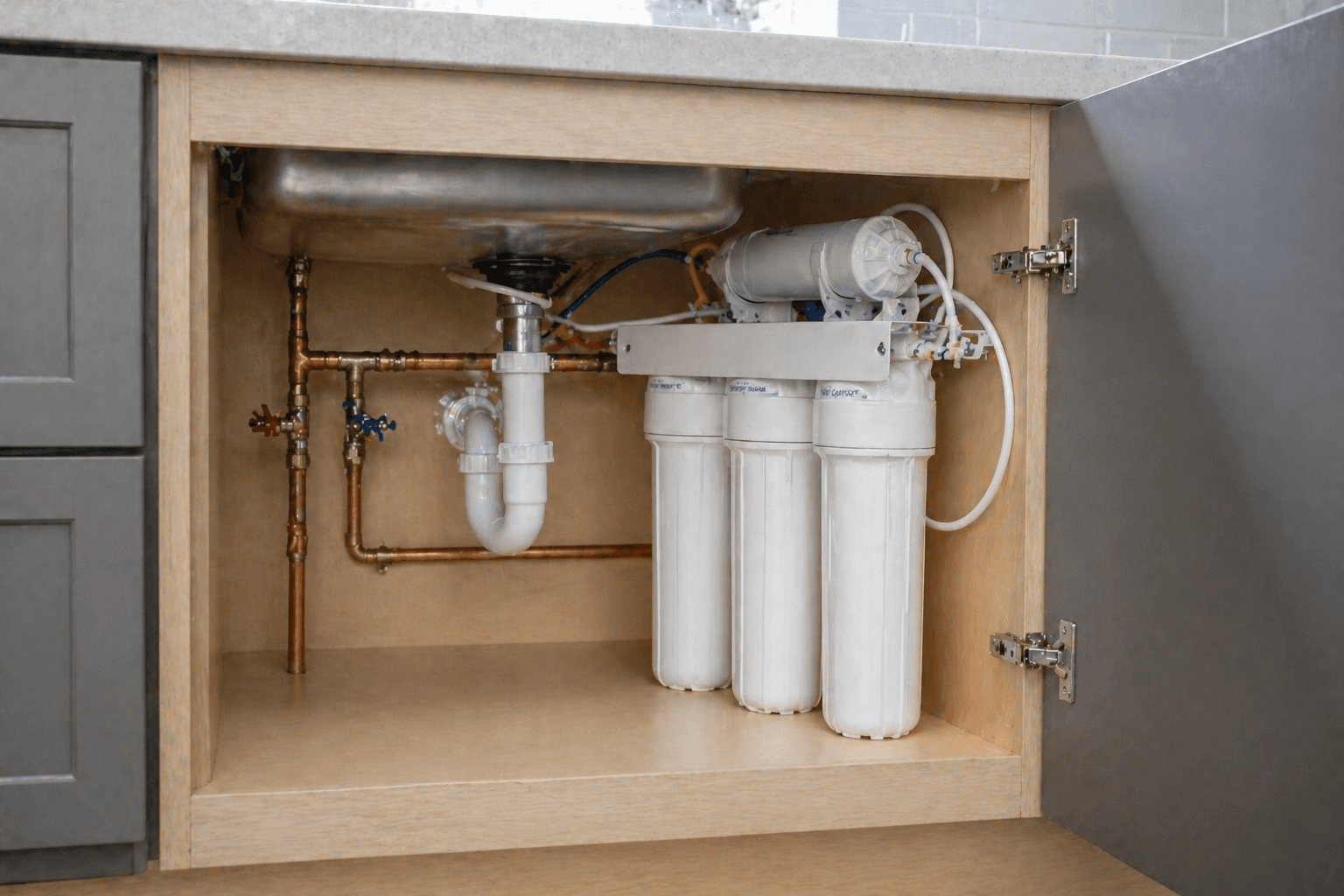
There is one more restriction people forget entirely: filter cartridges left in past their service life. A carbon block rated for six months and left in for three years does not stop filtering — it becomes a restriction plate in the middle of your supply line. If your house has a filter housing and nobody remembers the last change, change it before you spend money diagnosing anything else.
Corroded Galvanized Supply Lines Squeeze Older Island Homes
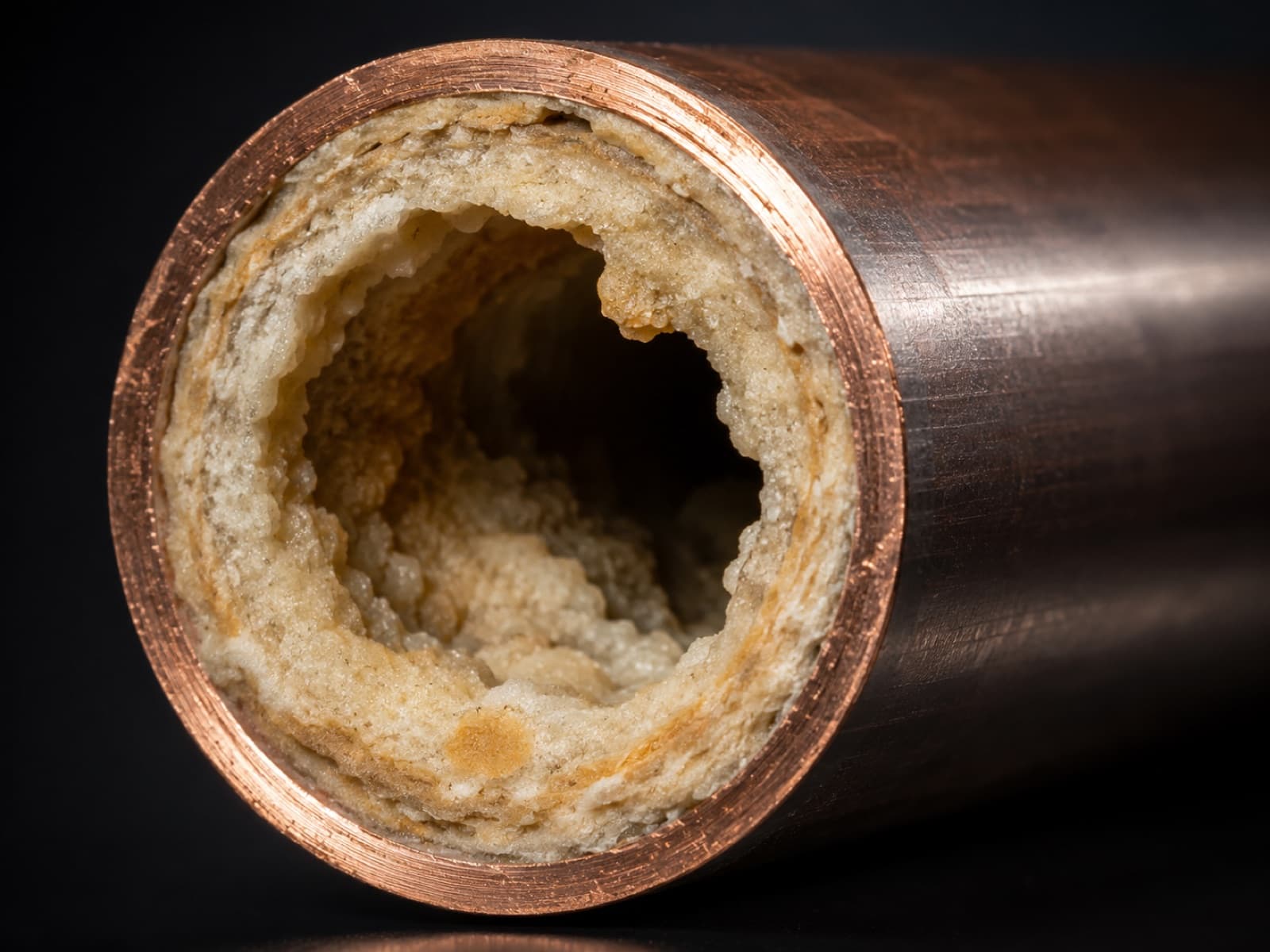
When the whole house is weak and it has been getting worse gradually over years rather than dropping off suddenly, the pipe itself is usually the answer. Homes on O'ahu built before the early 1980s were commonly plumbed in galvanized steel, and galvanized rusts from the inside out. The corrosion does not form a smooth lining — it builds rough nodules that grow inward from the pipe wall until a three-quarter-inch line is passing water like a three-eighths-inch line. Nothing about the outside of the pipe looks wrong. The bore has simply closed up.
Two local factors speed this along. Our water carries enough dissolved mineral content to lay scale on top of the rust, and coastal salt air attacks the exterior of any exposed run at the same time. A quieter factor matters too: because nothing here ever freezes, island homes rarely suffer the dramatic winter failure that forces a mainland homeowner to replace a system. Galvanized lines on O'ahu just keep going, quietly narrowing, decades past retirement.
The pattern is recognizable once you know it. Pressure that has declined slowly over years, weakness on both hot and cold, rusty or yellow-tinged water on the first draw of the morning that clears after thirty seconds, and — the giveaway — pinhole leaks that start showing up one after another in different parts of the house. Repairing those pinholes one at a time is money spent on a system that is telling you it is finished. When the pattern is that clear, repiping the home fixes the pressure, the discoloration, and the leaks in a single pass instead of chasing them for the next five years.
Check the Regulator, the Main Valve, and the Meter Side
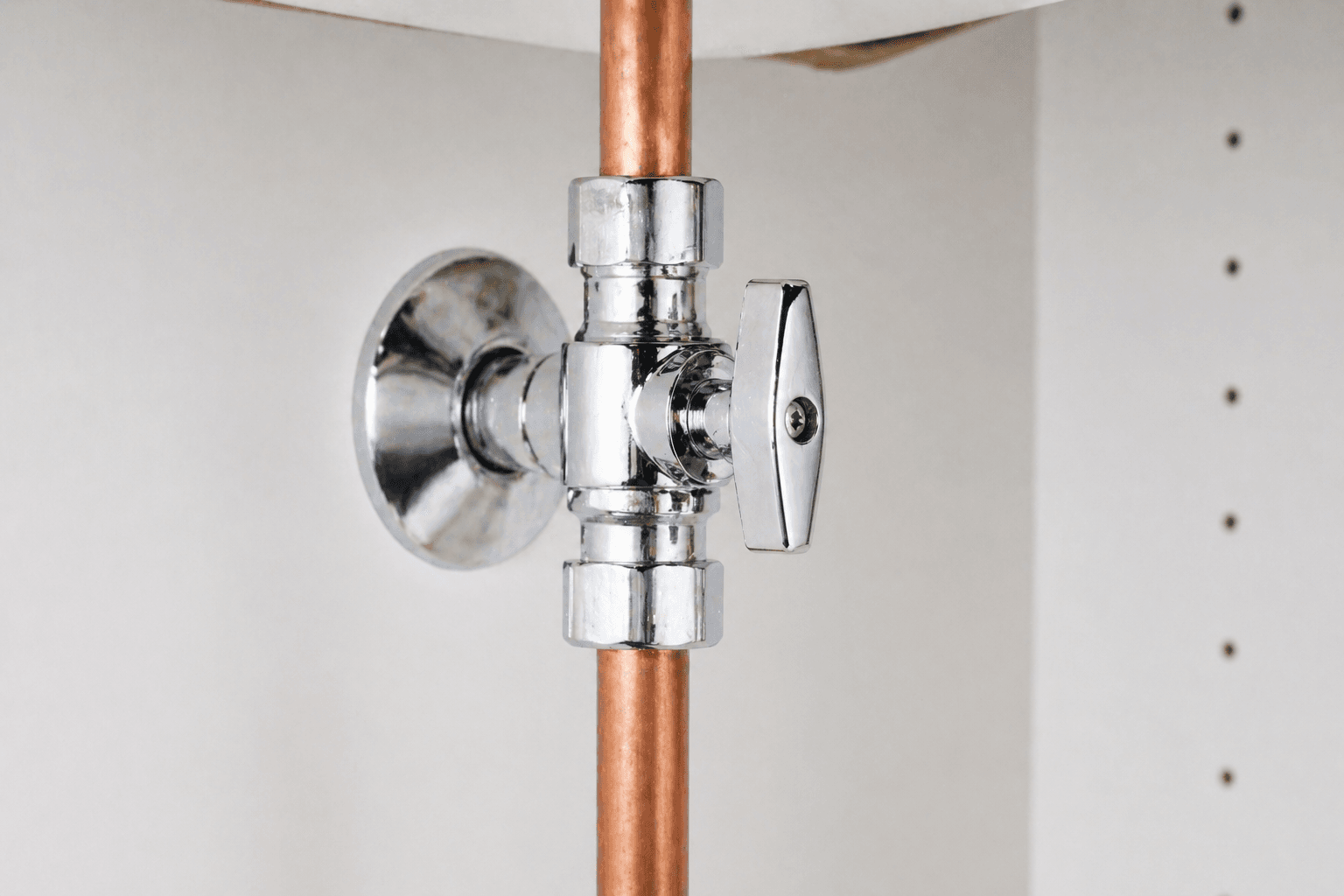
Before assuming anything expensive, check that your water is actually all the way on. After any plumbing work — a heater swap, a toilet replacement, a repair under a sink — a main shut-off or a meter-side valve sometimes gets left three-quarters open. A gate valve that has been closed and reopened many times over the years can also lose its internal gate, so the handle turns fully while the disc stays down in the flow. Find your main shut-off, usually near the meter or where the supply enters the house, and confirm it is genuinely at its stop. This costs nothing and it resolves more whole-house pressure complaints than most homeowners would believe.
The next component is the pressure reducing valve, a bell-shaped brass fitting on the main line just after it enters the property. Homes on lower ground fed by a high-elevation reservoir usually have one, because incoming street pressure would otherwise be too high for household fixtures. It is a wearing part — a spring and a diaphragm, with a service life of ten to fifteen years. Failed closed, it drops pressure everywhere at once, often abruptly. Failed open, you get the opposite problem: pressure above 80 psi, quietly shortening the life of every supply hose, fill valve, and water heater in the building. Either way it is a replaceable part rather than a whole-plumbing problem, and swapping one is standard water system repair on O'ahu.
Finally, some of it may not be your house at all. Board of Water Supply pressure varies with elevation across the island, and homes high on a hillside in Manoa, Aiea Heights, or up toward the Ko'olau simply receive less pressure than a house near sea level on the same system. If your static gauge reading at the hose bib is low and everything inside the property checks out clean, the fix is not repair — it is a booster pump sized to the house, which brings a genuinely low incoming supply up to a comfortable working pressure.
When Weak Flow Means You Are Losing Water Somewhere Else
There is one cause worth ruling out early, because it keeps costing you money while you think about it. Water escaping through a hidden leak — under a slab, inside a wall, or in the buried line between the meter and the house — bleeds off pressure before it reaches a fixture, and shows up on your bill every month in the meantime. The test takes twenty minutes. Shut off every fixture and appliance, note the meter dial position, then look again with nothing having run. If the dial moved, water is leaving the system somewhere you cannot see, and pressure is the least expensive part of that problem.
If you have worked through the aerators, confirmed your valves are open, and the whole house still runs weak, you have narrowed it to something behind a wall or under the ground — and that is the point to stop guessing. Alpha Omega Plumbing has been diagnosing pressure problems in O'ahu homes since 2014, from Honolulu and Kailua to Pearl City and Mililani, and a gauge reading plus a few minutes at the meter usually tells us which of these five causes you are dealing with before we open anything. Call (808) 847-5414 for a free estimate, or start with professional leak detection if the meter test came back moving.
Frequently Asked Questions
What is normal water pressure for a home in Hawaii?
Most O'ahu homes should read between 45 and 80 psi on a gauge threaded onto an outdoor hose bib with nothing else running. Below 40 psi feels noticeably weak at the shower, and anything above 80 psi is high enough to shorten the life of supply hoses, fill valves, and your water heater.
How much does it cost to fix low water pressure?
It depends entirely on the cause, which is why diagnosis comes first. Cleaning an aerator or replacing a filter cartridge costs almost nothing, a pressure reducing valve replacement is a modest one-visit job, and repiping a whole house sits at the far end of the range. Hawaii's labor and material rates run higher than the mainland, so get the cause identified before you budget — Alpha Omega Plumbing provides free estimates at (808) 847-5414.
Why is water pressure lower in some O'ahu neighborhoods than others?
Board of Water Supply pressure is driven largely by elevation relative to the reservoir feeding the zone, so homes high on a hillside in Manoa, Aiea Heights, or the Ko'olau foothills naturally receive less than a house near sea level. If your incoming pressure is genuinely low at the meter, a properly sized booster pump is the fix rather than a repair.
Can I fix low water pressure myself or should I call a plumber?
Cleaning aerators and showerheads, changing an overdue filter cartridge, and confirming your main shut-off is fully open are all safe homeowner jobs worth trying first. Once the whole house is weak, a pressure gauge reads low, or you suspect corroded pipe, a failing regulator, or a hidden leak, call a professional — Alpha Omega Plumbing can be reached at (808) 847-5414.
Learn more about our Water Systems services on Oʻahu
water system repair on O'ahu →Alpha Omega Plumbing Inc
Serving all of O'ahu since 2014.
More From the Blog
Need a Plumber on O'ahu?
Insured and available 24/7 for emergencies across the island.