
7 Signs a Plumbing Emergency Is About to Happen
August 24, 2026 · Alpha Omega Plumbing Inc
Most plumbing emergencies are not sudden. A pipe that bursts at 2 a.m. has usually been corroding for years, and a sewer line that backs up into a shower was dropping hints for weeks. The failures that ruin a floor or a wall cavity almost always announce themselves first — quietly, and in ways that are easy to dismiss as a quirk of an older island house. Here are the seven signs O'ahu homeowners should never ignore, what each one is telling you about the plumbing behind the wall, and how much time you realistically have to act on it.
Water Stains, Warm Spots, and a Meter That Never Stops
The first sign is a water bill that climbed without any change in how the household uses water. People tend to explain it away — a visiting family member, a long stretch of yard watering — and by the time it repeats a second and third month, the leak behind it has been running the whole time. There is a test that settles it in twenty minutes. Turn off every fixture and appliance in the house, go out to the meter, and note the dial position. Come back after twenty minutes with nothing running. If the dial has moved at all, you have water escaping somewhere between the meter and your fixtures. Many newer meters also have a small triangular or star-shaped leak indicator that spins on any flow, however slight.
The second sign is physical evidence on the surfaces of your home. Look for a brown ring on a ceiling, paint that has started to bubble or blister on a wall, baseboards that feel soft, a section of flooring that has cupped, or a musty smell in a closet or under a sink that never quite goes away. On a slab foundation, add one more: a patch of floor that is noticeably warm underfoot. That is a hot water line leaking beneath the concrete, and it is the single clearest indicator of a slab leak a homeowner can spot without equipment.
Hawai'i makes both of these harder to catch. Our humidity keeps drywall and framing damp enough that a slow leak does not dry between events, so mold gets established before a stain ever shows on the surface. The upside is that neither sign is subtle once you know to look, and catching it here is the difference between a repair inside one wall and a repair that involves flooring, framing, and remediation. If the meter test comes back positive but nothing is visible, professional leak detection locates it without opening walls to guess.
Slow Drains and Gurgling Fixtures Point to the Main Line
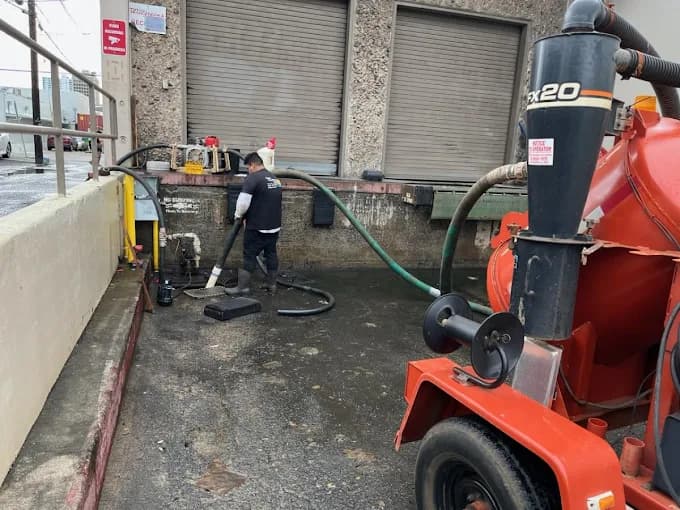
The third sign is more than one drain running slow at the same time. A single sluggish sink is a local clog in that fixture's trap or branch line, and it is a minor annoyance. When the kitchen sink, a bathroom lavatory, and a shower all slow down within the same week, the restriction is downstream of all of them — in the main line that carries everything out of the house. That is a completely different problem with a completely different consequence, because when a main line closes off there is nowhere for wastewater to go except back up through the lowest fixture in the house.
The fourth sign is the one that means the clock is genuinely running: air where air should not be. A toilet that bubbles or gurgles when you run the washing machine, a tub that burps when a nearby toilet flushes, or a toilet whose water level rises and falls on its own is telling you that the main line is partially blocked and drainage is displacing air backward through the system. Homeowners routinely live with this for weeks. It is the last clear warning before a backup, and a sewage backup is a biohazard event that involves professional cleanup on top of the plumbing repair.
On O'ahu the usual culprits are roots finding the joints in older clay or cast-iron laterals, years of accumulated grease narrowing the pipe, and bellied sections where ground movement has left a low spot that collects solids. None of it resolves on its own, and none of it responds to a bottle of drain chemical — that just adds a caustic liquid to the standing water a plumber will have to work in. A camera inspection identifies which of the three it is, and clearing the main sewer line at the gurgling stage is routine work rather than an emergency call.
What Discolored Water and Falling Pressure Say About Your Supply Pipes
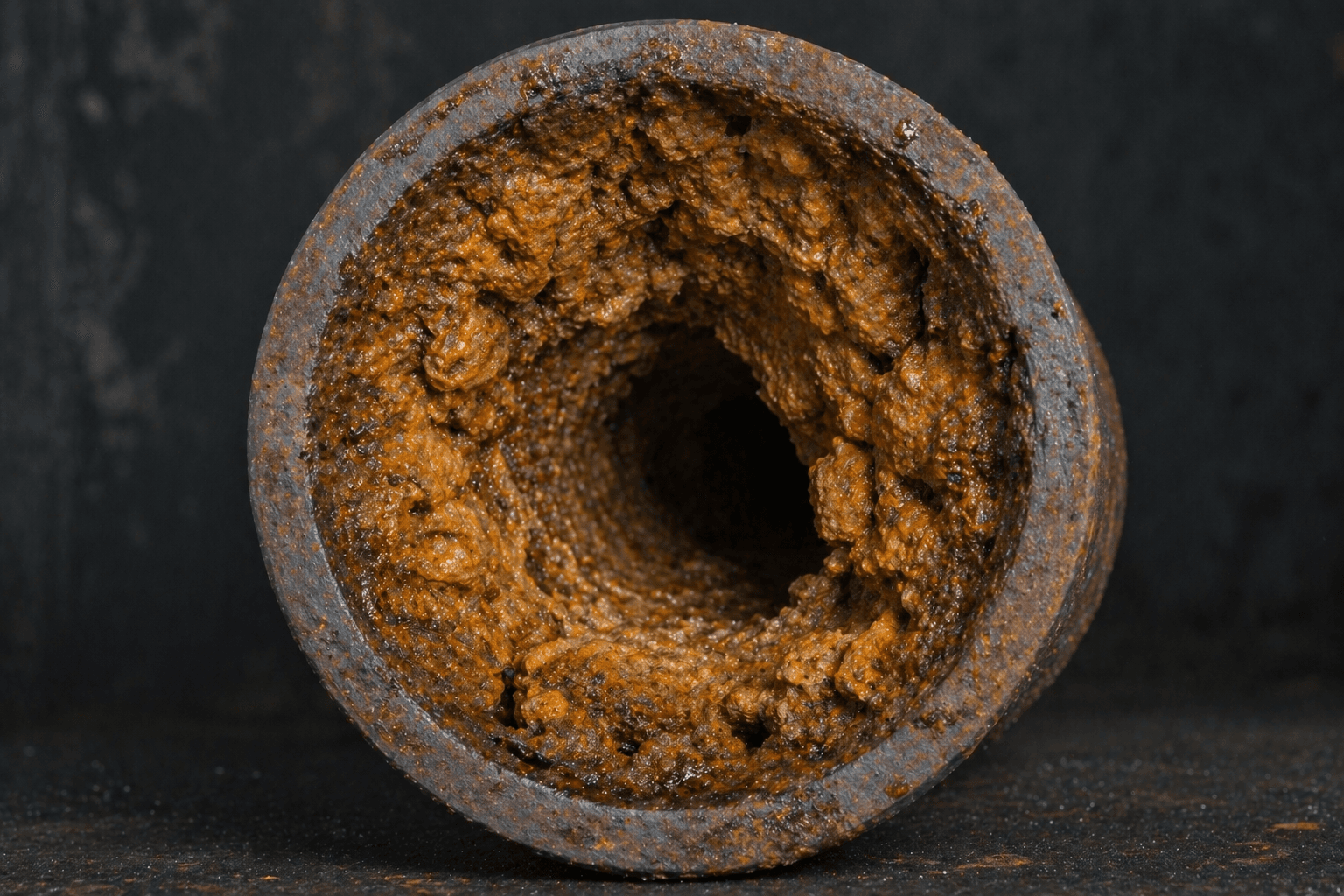
The fifth sign is rusty, brown, or yellow-tinged water, and the detail that matters is when it appears. Discoloration on the first draw of the morning that clears after thirty seconds means the rust is forming inside your own supply lines overnight while the water sits still. Water that is discolored constantly, or that turns brown across the whole house at once, more often points to work on the municipal side. The first case is the one to worry about, because rust in the water means the pipe wall is actively giving way from the inside.
The sixth sign is water pressure that has been falling gradually over months rather than dropping suddenly. A sudden loss usually means a break or a valve problem. A slow decline is the signature of pipes closing up — mineral scale building on interior walls, corrosion narrowing the effective diameter, or both at once. Homeowners adapt to it so slowly that they often only notice when a guest comments on the shower, which is why it is worth comparing against how the house performed a few years ago rather than last week.
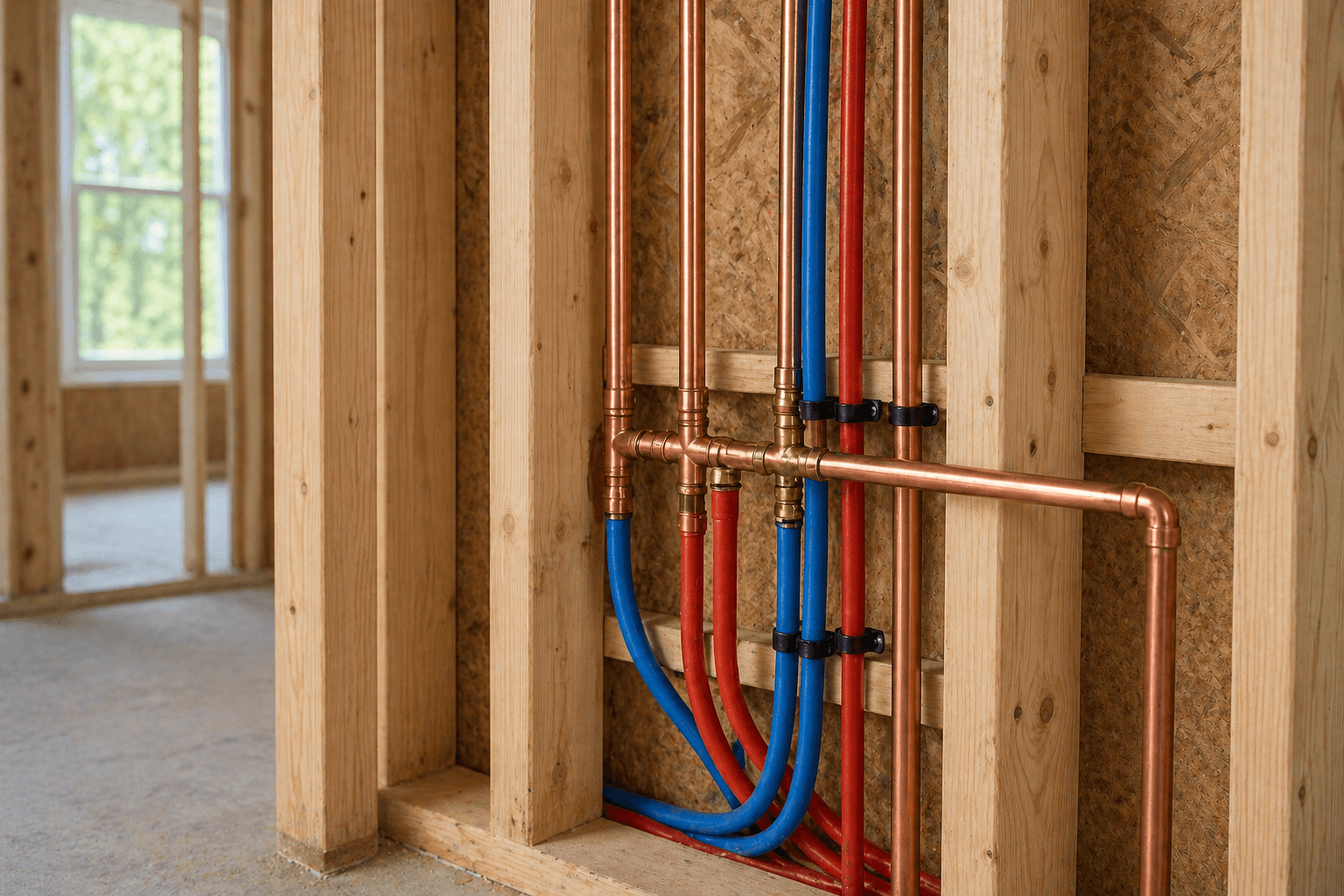
Both signs together, in a home built before the early 1980s, usually mean galvanized supply piping at the end of its service life. Hawai'i's mineral-heavy water and coastal salt air both accelerate the process, and copper installed in that era has its own failure mode — pinhole leaks that appear one after another once the first one shows up. A single pinhole repaired in isolation is a false economy in that situation. When the pattern is clear, repiping the house resolves the pressure complaint, the discolored water, and the leaks that would otherwise arrive on their own schedule over the next few years.
A Water Heater That Rumbles, Weeps, or Runs Cold Early
The seventh sign comes from the appliance most likely to fail catastrophically. A rumbling or popping noise during a heating cycle is sediment that has settled on the bottom of the tank, with water flashing to steam underneath it. That sediment layer also insulates the burner from the water, which is why a tank that rumbles usually starts running out of hot water earlier than it used to. Both symptoms mean the tank is working harder against a load that keeps growing.
The one that should never wait is moisture at the base of the tank. Rule out condensation and the fittings above it first, but if the seepage is at the seam and it returns after you dry it, the tank itself has corroded through and it will not be repaired — a tank does not seal itself back up. Replacing it on a scheduled Tuesday costs the same as replacing it on the day it lets go, minus forty to fifty gallons of water across your floor and whatever that reaches. Given how hard our water is on tanks here, any unit past the eight-year mark showing either symptom is worth a look, and water heater replacement planned in advance is a far better outcome than the alternative.
How Much Time You Actually Have — and When to Call
The seven signs do not all carry the same urgency. Gurgling fixtures, a warm spot on a slab, and a weeping water heater base are days, not weeks — those are failures already in progress. A creeping meter dial, a slow decline in pressure, and morning rust are weeks to months, but they never improve on their own and every one of them gets more expensive the longer it runs. Whichever category you are in, take five minutes now to find your main shutoff valve and confirm it actually turns. The middle of an emergency is a terrible time to discover it is seized, and in Hawai'i's climate an unused valve seizes more often than people expect.
If you have spotted any of these in your home, get it looked at while it is still a scheduled repair. Alpha Omega Plumbing has served O'ahu homeowners since 2014, and we would far rather diagnose a gurgling toilet on a weekday afternoon than pump out a flooded hallway at midnight. Call (808) 847-5414 for a free estimate, or if something has already gone wrong, our 24/7 emergency plumber crew is available around the clock across the island.
Frequently Asked Questions
What are the warning signs of a plumbing emergency?
The most reliable warning signs are small changes that show up weeks early. Watch for a water meter that moves with everything shut off, stains or bubbling paint on walls and ceilings, several drains slowing at once, gurgling toilets, rusty water on the first morning draw, gradually falling pressure, and a water heater that rumbles or weeps at the base. Any of them is worth a call to Alpha Omega Plumbing at (808) 847-5414.
How much does it cost to fix a plumbing problem before it becomes an emergency?
Almost always a fraction of the emergency version, because the cost of a burst pipe or sewer backup is mostly water damage and cleanup rather than the plumbing repair itself. Hawai'i labor and material rates run higher than the mainland, so catching it early matters more here. Alpha Omega Plumbing gives free estimates at (808) 847-5414.
Why do pipes fail faster in Hawaii than on the mainland?
Three things stack up here: mineral-heavy water that scales the inside of supply lines, coastal salt air that attacks pipe and fittings from the outside, and year-round humidity that keeps a slow leak from ever drying out. A large share of O'ahu housing also predates the early 1980s, which means galvanized supply piping at or past the end of its service life.
Can I wait to call a plumber if the leak seems small?
A small visible leak is usually the part of a larger problem you can see, and the damage from weeks of slow seepage into framing and drywall typically exceeds the repair itself. Gurgling drains and moisture under a water heater should not wait at all. When you are unsure how urgent it is, call Alpha Omega Plumbing at (808) 847-5414 and describe it — we will tell you honestly.
Learn more about our 24/7 Emergency Plumber services on Oʻahu
24/7 emergency plumber →Alpha Omega Plumbing Inc
Serving all of O'ahu since 2014.
More From the Blog
Need a Plumber on O'ahu?
Insured and available 24/7 for emergencies across the island.