
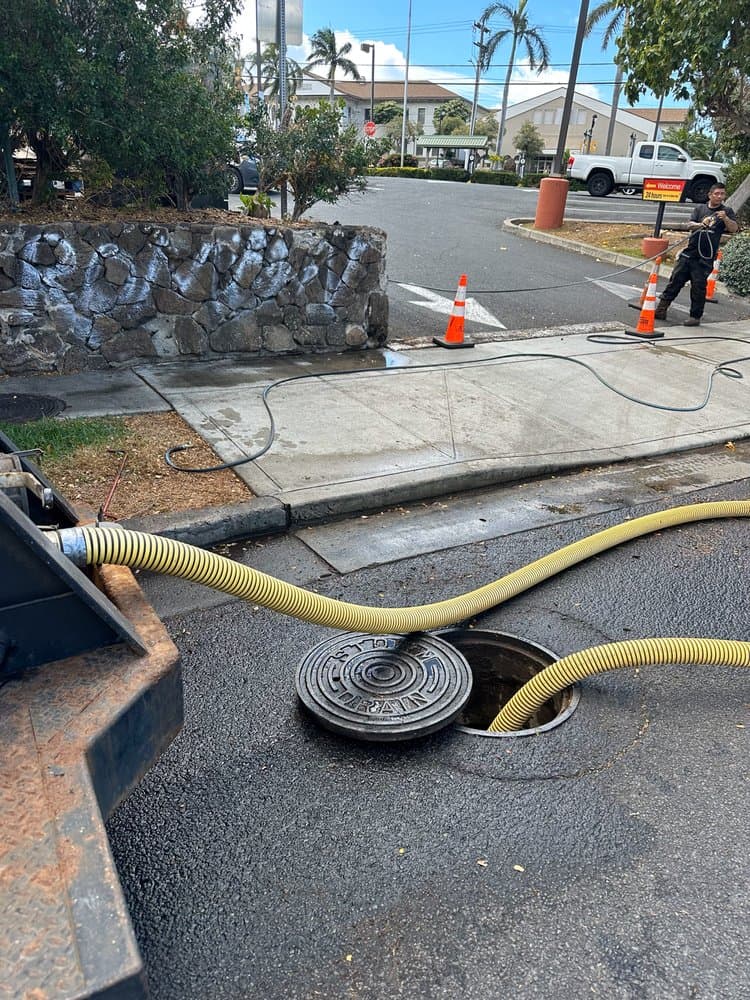
Septic vs. Sewer: Which Does Your O'ahu Home Have?
August 13, 2026 · Alpha Omega Plumbing Inc
Most homes in urban Honolulu are connected to the City & County sewer system, while properties on the North Shore, in Waimānalo, along parts of the Wai'anae Coast, and on older large-lot parcels are far more likely to be running a private septic system — or an even older cesspool. The quickest way to find out which you have is to look for a sewer charge on your monthly water bill: if there's a line item for sewer service, you're on the municipal system, and if there isn't, the wastewater is being handled somewhere on your own property. That single distinction changes who is responsible for repairs, what you should budget for, and whether Hawai'i's 2050 conversion law applies to you. Here's how to confirm it, and what each answer means. Alpha Omega Plumbing is at (808) 847-5414 if you'd rather have someone come look.
How to Confirm Which Wastewater System Your Property Uses
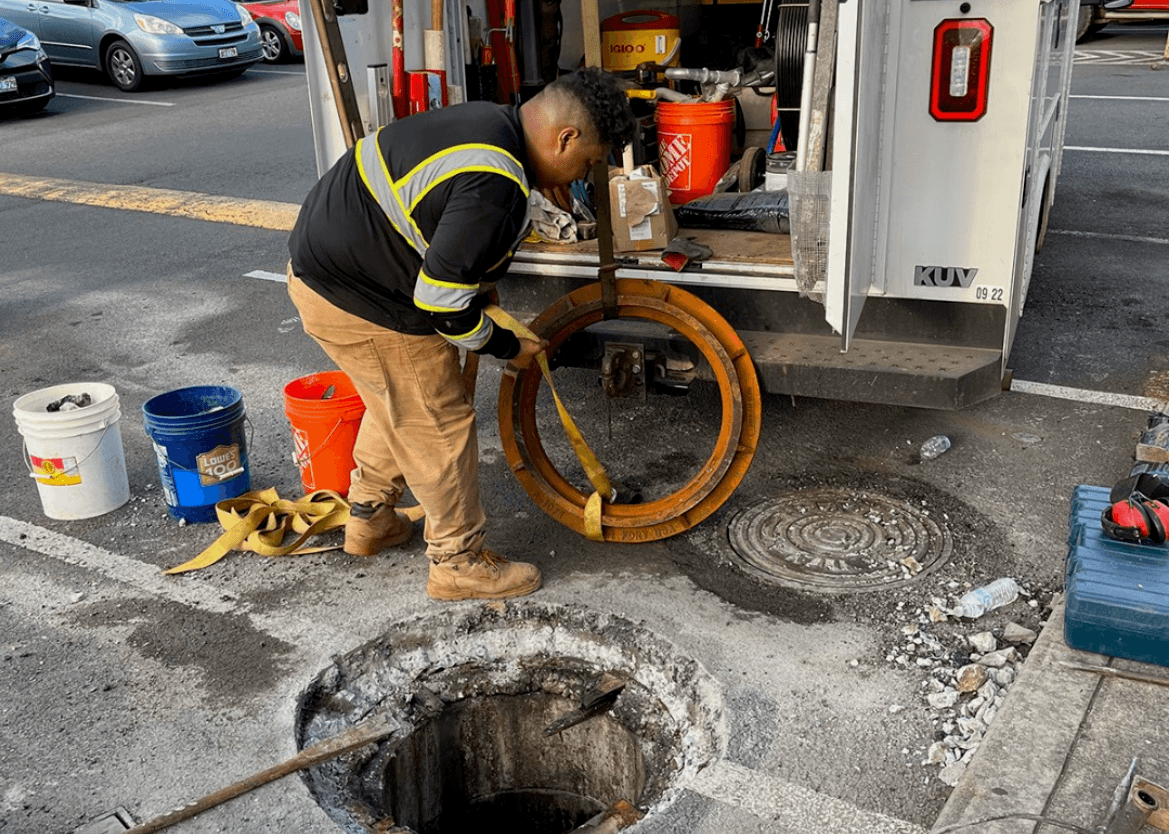
Start with the bill. On O'ahu, sewer service is billed by the City & County through the same statement the Board of Water Supply sends you, so a sewer charge on that bill is solid confirmation that your house discharges into a public main. No sewer charge, and the waste is staying on your lot — in a tank, a leach field, or a pit.
Next, walk the yard. A septic tank usually shows itself as one or two round access lids, often concrete or heavy plastic, sitting flush with the grass or a few inches below it, typically ten to twenty feet from the house on the side where the main waste line exits. A cesspool more often has a single larger cap. A drain field gives itself away as a rectangular stretch of lawn that greens up faster after rain and that a previous owner never built or planted anything on. If you find a cleanout near the foundation and nothing else, that alone doesn't settle it — sewered homes have cleanouts too.
Then check paper. The building permit history for the parcel, searchable through the City's Department of Planning and Permitting by tax map key, will normally show either a sewer connection permit or an individual wastewater system permit. Escrow paperwork from when you bought the house is the other reliable place to look; a septic or cesspool disclosure is standard in Hawai'i transactions and the seller's disclosure statement should name the system.
If none of that resolves it — and on older properties it often doesn't, because tanks get buried under decades of landscaping — a plumber can locate the system directly. We run a camera and a locator down the waste line from inside the house and follow it to wherever it terminates, which answers the question definitively in under an hour and shows you the pipe's condition at the same time.
Cesspools: The Third Option Still Common Across Hawai'i
Mainland guides frame this as a two-way choice, and in Hawai'i that's wrong. A large number of local properties are on cesspools — roughly 88,000 statewide when the state last counted, with several thousand of those on O'ahu. If your house predates the 1990s and isn't sewered, a cesspool is a real possibility.
The difference matters. A septic system treats waste in stages: solids settle in a sealed tank, baffles hold back grease and scum, and the clarified liquid flows out to a drain field where soil and bacteria finish the job before it reaches groundwater. A cesspool skips all of that. It's essentially a lined pit that collects waste and lets the liquid seep straight into the ground with no treatment step at all. That's why cesspools need pumping more often than septic tanks, and why the state stopped permitting new ones in 2016.
There's a water-quality reason behind the ban that's specific to islands. Untreated effluent carries nitrogen and bacteria into groundwater that, on O'ahu, is both the drinking water aquifer and the source of the seeps feeding nearshore reefs. That's the whole argument for the conversion program, and it's why the state has kept pressure on the issue rather than letting it drift.
If you're not sure whether you have a tank or a pit, don't guess based on the lid. The reliable tell is the internal structure, and that means opening it during a pump-out. Our septic and cesspool service crews identify the system type as part of any first visit, and the documentation matters later — Hawai'i DOH and the City both want service records for compliance and for property sales.
Who Pays for What: Monthly Fees vs. Tank Upkeep
On sewer, you pay every month and the City maintains the main. What surprises people is where the boundary sits: the lateral line running from your house out to the connection is yours, not the City's, and a collapse or root intrusion in that stretch is a homeowner expense even though most of it sits under the yard or the sidewalk. If waste is backing up into the lowest fixtures in the house and neighbors aren't affected, the problem is almost always in that private lateral, and it needs sewer line clearing rather than a call to the City.
On septic, there's no monthly bill, which fools people into thinking it's free. It isn't — it's deferred. A typical household tank needs pumping every three to five years, and the drain field, which is the expensive part, has a service life measured in decades rather than forever. Replacing a failed field runs into five figures here once you account for excavation, permits, and the cost of getting equipment and materials onto the island. Skipping pump-outs is the single most reliable way to shorten that field's life, because solids that overflow the tank clog the soil permanently.
Cesspools sit in the worst position of the three. They need regular pumping more frequently than septic tanks, they carry the conversion obligation described below, and they can complicate a sale or a refinance. Owning one isn't an emergency, but it is a known future cost, and it's better to plan for it on your schedule than on a lender's.
One thing applies to all three: Hawai'i labor and equipment rates run above mainland averages, and anything requiring excavation costs more here than the national figures you'll find online. Budget accordingly rather than assuming a mainland quote transfers.
The 2050 Conversion Deadline Every Cesspool Owner Should Know
Act 125, passed in 2017, requires every cesspool in the state to be converted, upgraded, or connected to a sewer system by January 1, 2050. The Hawai'i Department of Health has since ranked cesspools into priority tiers based on how much risk each poses to drinking water, streams, and coastal waters, and properties in the higher tiers are the ones facing the most pressure to move early. You can check the current program details and your area's status through the state's wastewater branch at health.hawaii.gov/wastewater.
Practically, owners have three paths. Connect to the municipal sewer if a main runs close enough to make it feasible — usually the cleanest outcome where it's available. Convert to a conventional septic system with a proper drain field, which requires enough usable land and soil that percolates. Or install an aerobic treatment unit, which handles smaller lots and poorer soils by treating effluent mechanically before discharge, at a higher purchase and maintenance cost.
The advice worth taking is simple: don't wait. Grant and financing programs for conversions have opened and closed over the years, contractor capacity on O'ahu is limited, and the closer the deadline gets the more competition there will be for both. An owner who converts on their own timeline gets to shop the job. An owner who waits until a failed system or a pending sale forces it will pay whatever the calendar demands.
If your cesspool is functioning normally today, nothing about this is urgent this month. It's a planning item — worth getting a real assessment of what conversion would take on your specific lot, so the number stops being a mystery.
Buying or Selling on O'ahu? Inspect Before You Sign
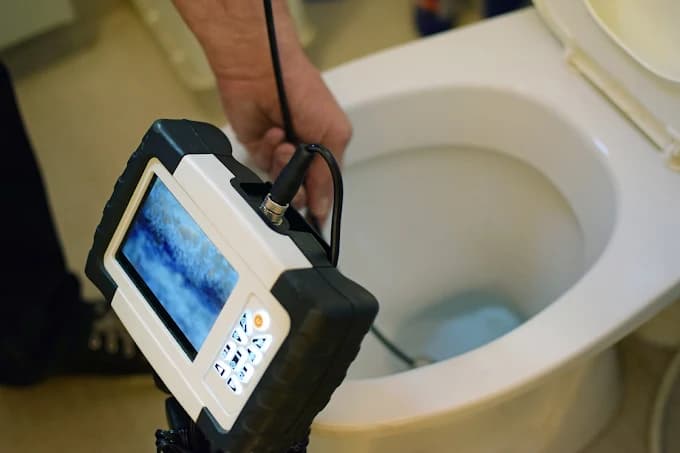
A wastewater system is one of the few things about a house that can be invisible on a walkthrough and enormously expensive a year later. Standard home inspections generally don't open tanks, don't scope lines, and don't confirm what type of system is present. That's a gap worth closing before money changes hands.
What we recommend on any O'ahu purchase where the property isn't clearly sewered: locate and confirm the system type, pump the tank so its interior, baffles, and liquid level can actually be seen, and run a video camera inspection of the line between the house and the system. Together those take part of a day and tell you whether you're inheriting a healthy setup, a tank due for routine service, or a drain field on its last years. Sellers benefit from the same information — documented recent service removes an easy point of negotiation.
Watch for the symptoms that say something is already wrong: slow drains throughout the house rather than at one fixture, a soggy or unusually green patch over the tank or field, a sewage smell outdoors, or gurgling from fixtures when the washing machine drains. Any of those on an unsewered property means the system needs attention now, not at the next scheduled pump-out.
Alpha Omega Plumbing has worked on O'ahu wastewater systems since 2014 — septic, cesspool, and sewer, across Honolulu, Kailua, Kāne'ohe, Waimānalo, Pearl City, Kapolei and the rest of the island. If you don't know what's under your yard, we'll find out and tell you plainly what shape it's in. Call (808) 847-5414 for a free estimate.
Frequently Asked Questions
How do I know if my house is on septic or connected to the sewer?
Check your monthly water bill first — a sewer service charge means you're on the City & County system, and no charge means the waste is handled on your own property. Confirm it by looking for tank lids or a drain field in the yard and by checking the building permit records for the parcel. Alpha Omega Plumbing can locate and identify the system directly at (808) 847-5414.
How much does it cost to convert a cesspool to a septic system in Hawaii?
Conversions are a five-figure project in most cases, and the range is wide because it depends on lot size, soil percolation, how much excavation is needed, and whether a conventional drain field or an aerobic treatment unit is required. Hawaii's labor and material costs run above mainland averages. Alpha Omega Plumbing assesses the property and quotes conversions in writing — call (808) 847-5414 for a free estimate.
Are cesspools still legal on O'ahu?
Existing cesspools remain legal to use for now, but no new ones have been permitted since 2016, and Act 125 requires every cesspool in the state to be converted, upgraded, or connected to a sewer by January 1, 2050. The Department of Health has ranked systems into priority tiers, so properties near drinking water sources, streams, and the shoreline face the most pressure to convert early.
Can I handle septic maintenance myself, or do I need a plumber?
Homeowners can and should handle the daily side — keeping grease, wipes, and harsh chemicals out of the drains, spacing out laundry loads, and keeping vehicles off the drain field. Pumping, inspecting baffles, diagnosing a saturated field, and anything requiring the tank to be opened are professional jobs, both for safety and because tank gases are genuinely dangerous. Alpha Omega Plumbing handles scheduled and emergency service across O'ahu at (808) 847-5414.
Learn more about our Septic & Cesspool Services services on Oʻahu
septic and cesspool service →Alpha Omega Plumbing Inc
Serving all of O'ahu since 2014.
More From the Blog
Need a Plumber on O'ahu?
Insured and available 24/7 for emergencies across the island.