
Prevent Clogged Drains Without Harsh Chemicals
August 10, 2026 · Alpha Omega Plumbing Inc
You can keep drains clear without ever pouring a bottle of caustic cleaner down them: catch hair and food scraps before they enter the pipe, flush lines with very hot water weekly, keep grease out of the kitchen sink entirely, and clean the P-trap or use a drain snake when flow slows instead of waiting for a full stoppage. Those four habits handle the overwhelming majority of household blockages. Chemical drain openers do clear some clogs, but they do it by generating heat and corroding whatever they touch — including the pipe itself — and on O'ahu, where a lot of homes still run original galvanized and cast-iron lines, that trade is a bad one. Here's what actually works, and when a slow drain has stopped being a maintenance problem. Alpha Omega Plumbing is at (808) 847-5414 if you'd rather skip straight to a professional.
What Caustic Drain Openers Do to Island Pipes
Most supermarket drain products work on one of two chemistries: sodium hydroxide (lye) or sulfuric acid. Both dissolve organic blockages through an aggressive exothermic reaction — the bottle gets hot because the reaction is generating real heat inside your plumbing. That heat is the problem. In PVC waste lines it can soften joints and warp the pipe; in older metal lines it accelerates corrosion at exactly the spots already thinned by decades of service.
That matters more here than in most places. Plenty of Kaimuki, Manoa, Kalihi, and Wahiawa homes are still running the drain lines they were built with, and galvanized steel and cast iron both fail from the inside out. A pipe that's already scaled and pitted doesn't need a chemical bath. The clog frequently sits at a low point or an old joint — precisely where the wall is thinnest and where a leak is most expensive to reach.
There's a practical risk too. When a chemical opener fails to clear the blockage, you now have a standing column of caustic liquid in the trap. Anyone who then opens that trap, or plunges it, or pours a second product in on top of the first, is dealing with splash-back that can cause serious chemical burns. Plumbers ask whether anything was poured down the line before they start for exactly this reason — please tell us the truth, it changes how we open the pipe.
Enzyme-based drain maintainers are the one bottled exception worth keeping under the sink. They use bacterial cultures to digest grease and organic film rather than burning through it, so they're safe for every pipe material and for septic systems. They work slowly — overnight, not in fifteen minutes — which makes them a maintenance product rather than an emergency one, and that's the right way to use them.
Where Household Blockages Actually Form
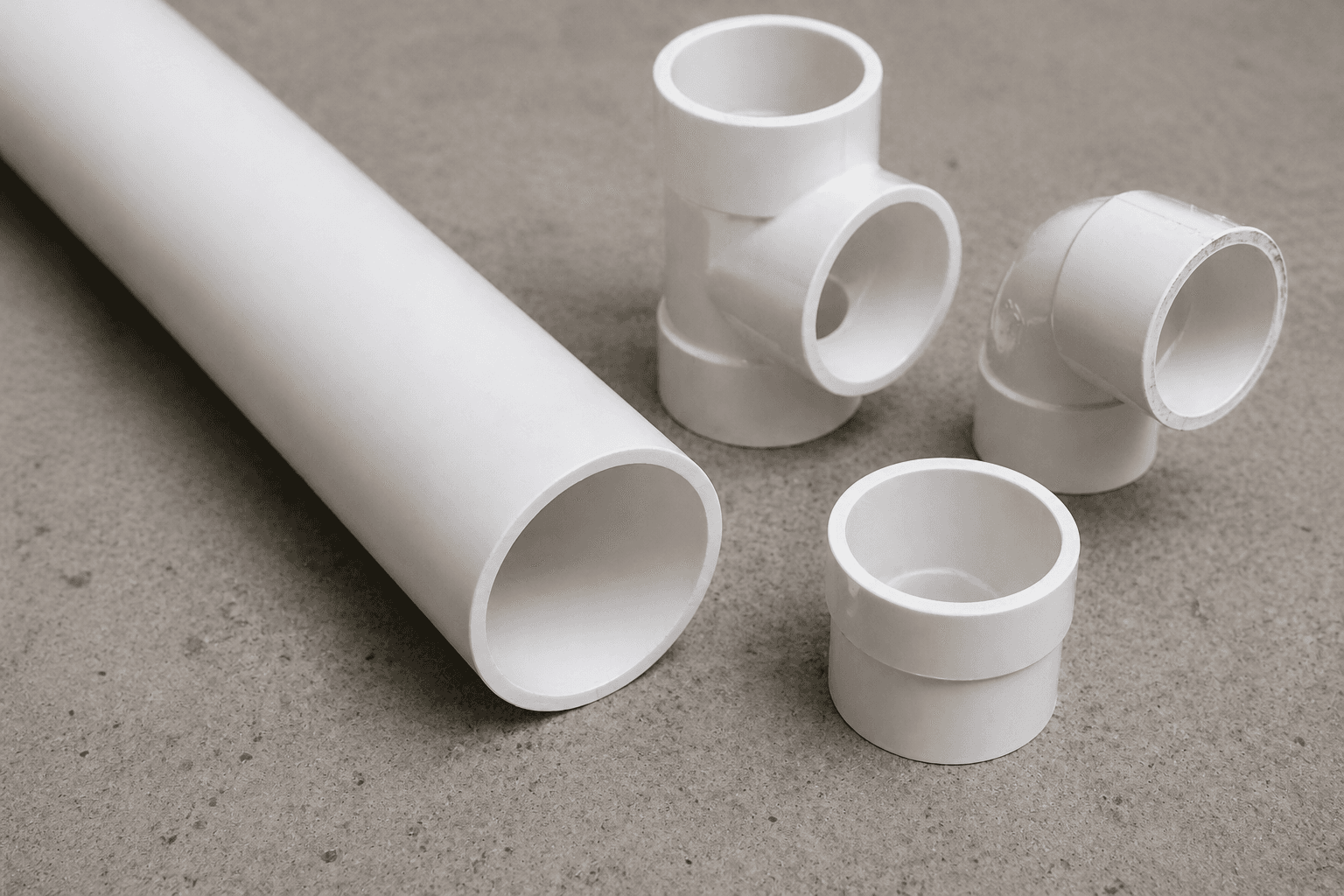
Nearly every slow fixture in a house traces to one of four culprits, and each has its own signature. Bathroom sinks and tubs clog with hair bound together by soap scum — a soft, ropy mass that builds in the trap and the first few feet of the line. Kitchen sinks clog with fats, oils, and grease that pour in as warm liquid and congeal into a waxy coating a few feet downstream where the pipe is cooler. Toilets clog with things that should never have been flushed, particularly the so-called flushable wipes, which do not break down and simply lash together into a rope. And older buried laterals clog with tree roots that found a hairline crack and kept growing.
Hawai'i's climate makes two of those worse. Water hardness across much of O'ahu leaves mineral scale on the inside of pipe walls, and that rough surface catches grease and hair that would slide past smooth PVC. The year-round growing season means roots never go dormant — a mainland lateral gets a winter break from root intrusion, and yours doesn't. Both effects are gradual, which is why the first symptom is almost always a drain that's just a bit slower than it used to be.
Pay attention to which fixtures are affected, because that tells you where the problem sits. One slow sink is a local clog in that fixture's trap or branch line. Several fixtures slow at once, or a gurgle in the tub when the toilet flushes, means the blockage is further downstream in the main line — and that's a different job requiring professional drain cleaning rather than anything you can reach from above.
Safe Methods That Clear a Sluggish Line
Start with boiling water, which sounds too simple to work but dissolves a surprising amount of early grease buildup. Pour a full kettle slowly down the drain in two or three stages, letting each one work before adding the next. Do this on a metal or cast-iron drain freely; on PVC, use very hot tap water rather than a rolling boil, because sustained boiling water can soften plastic joints over time.
Next, the baking soda and vinegar routine — half a cup of baking soda, then a cup of white vinegar, plugged with a stopper for fifteen minutes and chased with hot water. It is genuinely useful for deodorizing and loosening light film, and it is not going to clear a real clog. Anyone who tells you the fizzing dissolves a hair mass is overselling it. Treat it as monthly maintenance, not a repair.
For hair blockages, mechanical removal beats everything. A plastic barbed drain zip tool costs a few dollars, slides past the stopper, and pulls out the mass directly — unpleasant and completely effective. A cup plunger works on sinks and tubs if you first seal the overflow opening with a wet rag, otherwise you're just pushing air in a circle. And cleaning the P-trap by hand is well within reach for most homeowners: bucket underneath, unscrew both slip nuts, remove the U-bend, clean it out, reassemble hand-tight plus a quarter turn.
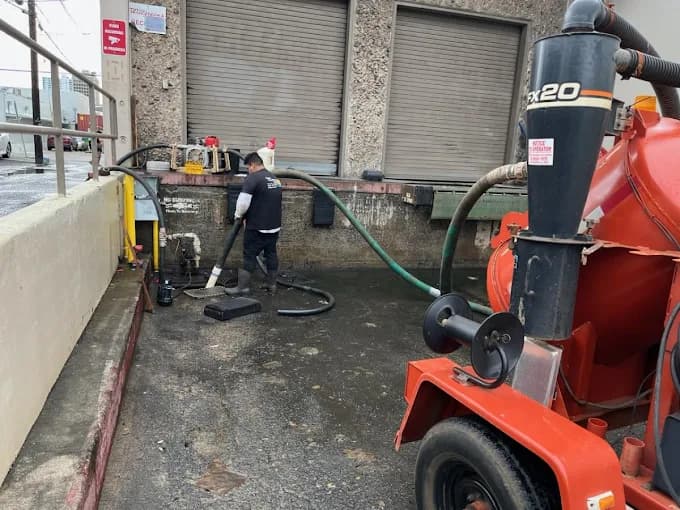
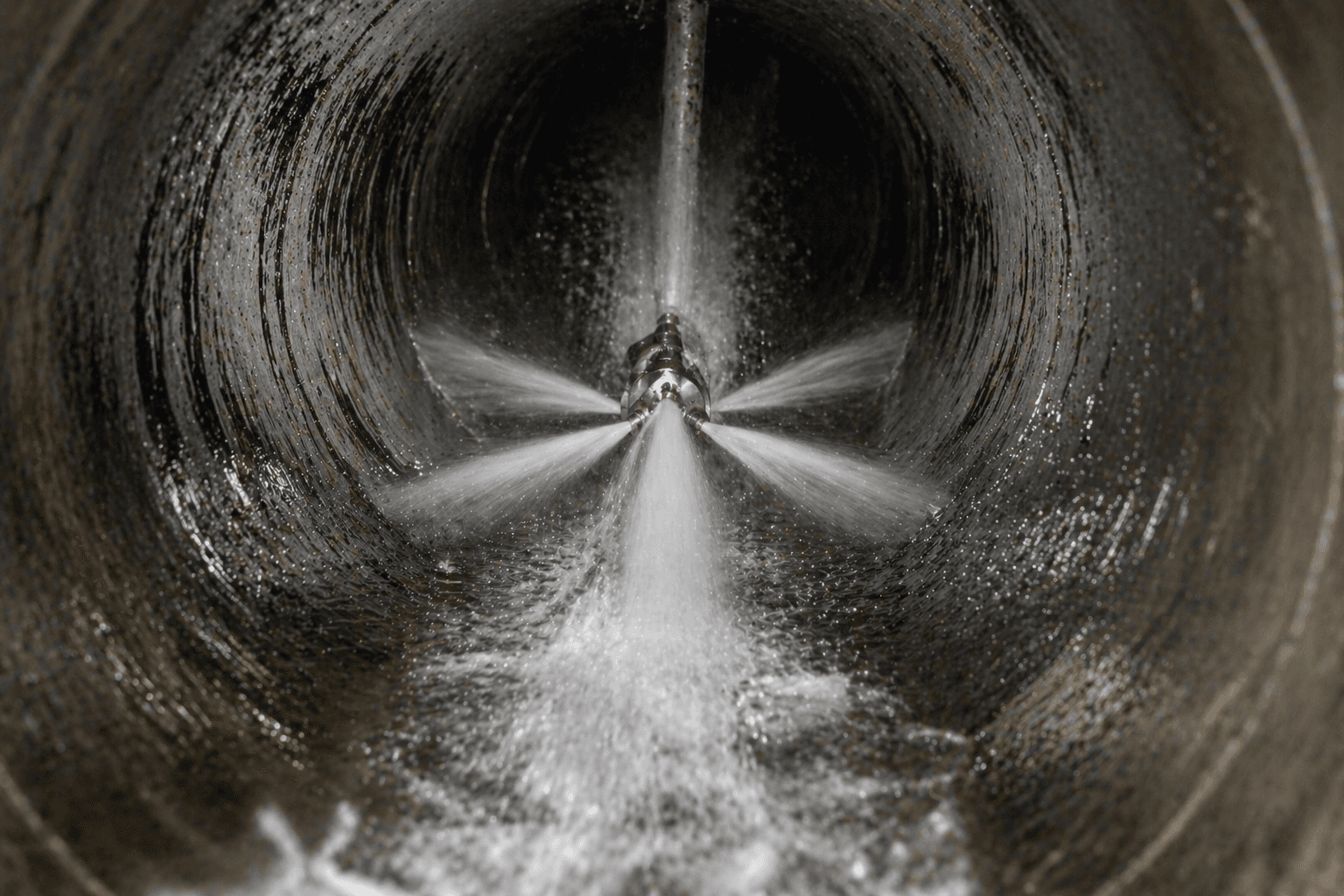
What you should not do is run a powered auger into a line you can't see, or force a cable around a fitting that's resisting. Drain machines catch, kink, and punch through corroded pipe walls, and a cable that snags in a cast-iron line can turn a two-hundred-dollar clog into a wall-opening repair. When a blockage is deep enough to need a machine, it's deep enough to need someone who's done it before — and often it needs hydro jetting, which scours the full pipe diameter with water instead of just boring a hole through the middle of the obstruction.
Everyday Habits That Keep Water Moving
Prevention is mostly about what never enters the pipe. Put a mesh strainer in every sink and tub — the single highest-return thing on this list, at a couple of dollars per drain. Empty it into the trash, not back into the sink.
Grease is the kitchen rule that matters most. Pour cooking fat, bacon drippings, and oil into a can or jar, let it solidify, and throw it away. Wipe greasy pans with a paper towel before they reach the sink. Hot water and dish soap do not solve this — they just move the problem twenty feet down the line, where it cools and sets against the pipe wall and starts catching everything else that passes.
A garbage disposal is not a trash can. Coffee grounds, eggshells, rice, pasta, potato peels, and anything fibrous like celery or onion skin all belong in the bin. Run cold water for fifteen seconds before, during, and after grinding — cold keeps fats solid so they get chopped and flushed instead of coating the chamber. If your unit has started backing up or smells no matter what you do, that's usually the line rather than the machine, and our garbage disposal service can sort out which.
In the bathroom, brush hair before showering, catch what the strainer misses, and flush nothing but toilet paper. Wipes labeled flushable are the most common cause of avoidable main-line stoppages we see, and no amount of marketing changes what they do in a pipe. Once a week, run the hottest tap water for a minute down each drain — including the guest bath and the laundry sink nobody uses, where the trap can dry out and let sewer gas back into the room.
Signs a Slow Drain Has Become a Bigger Problem
Some symptoms mean the issue is past household maintenance. Multiple fixtures draining slowly at the same time points at the main line. Water backing up into a tub or shower when the washing machine drains or a toilet flushes means the blockage is below the point where those lines join. A persistent sewage smell, or gurgling from a fixture you're not using, indicates a venting problem or a partial obstruction affecting the whole system. And a drain that clogs again within weeks of being cleared was never really cleared — something structural is holding material back.
That last one usually needs a camera. A video inspection down the line shows whether you're dealing with root intrusion, a bellied section holding standing water, scale narrowing an old pipe, or a crack that's letting soil in. It's the difference between guessing and knowing, and it decides whether the right answer is jetting, a spot repair, or lining the pipe. Clearing the same blockage three times costs more than diagnosing it once.
If waste is actively coming up out of a drain, stop using water in the house and treat it as urgent — that's a contaminated backup, not a slow sink, and it needs an emergency plumber rather than another bottle of anything.
For everything short of that, a slow drain caught early is a cheap, quick visit. Alpha Omega Plumbing has been clearing and repairing drain lines across O'ahu since 2014 — Honolulu, Kailua, Kāne'ohe, Pearl City, Mililani, Kapolei and everywhere between — and we'd rather scope a sluggish line now than pump out your ground floor later. Call (808) 847-5414 for a free estimate.
Frequently Asked Questions
Is it safe to use Drano or liquid drain cleaner in my pipes?
It's risky, especially in older homes. Caustic openers generate heat that can warp PVC joints and accelerate corrosion in the galvanized and cast-iron lines still common in older O'ahu houses, and any product left standing in a trap creates a burn hazard for whoever opens it next. Enzyme-based maintainers are the safe alternative, and Alpha Omega Plumbing can clear a stubborn line mechanically at (808) 847-5414.
How much does professional drain cleaning cost in Hawaii?
A straightforward single-fixture clog is typically the lowest-cost service call a plumber makes, while main-line jetting or a camera inspection costs more because of the equipment involved. Hawai'i labor rates do run above mainland averages. Alpha Omega Plumbing quotes drain work in writing before starting — call (808) 847-5414 for a free estimate.
Why do drains clog so often in O'ahu homes?
Hard water and year-round root growth make O'ahu drains clog more often. Hard water leaves mineral scale that roughens the inside of pipes so grease and hair snag instead of passing, and Hawai'i's growing season means tree roots work at buried sewer laterals all twelve months rather than going dormant in winter. Many older Honolulu-area homes also still run original metal drain lines that have narrowed over decades.
When should I stop trying to clear a drain myself and call a plumber?
Stop when more than one fixture is affected, when water backs up into a tub as another fixture drains, when the same clog returns within a few weeks, or when clearing it would require a powered auger. Those all point to a main-line or structural problem that a cable can worsen. Alpha Omega Plumbing is available around the clock at (808) 847-5414.
Learn more about our Drain Cleaning Services services on Oʻahu
professional drain cleaning →Alpha Omega Plumbing Inc
Serving all of O'ahu since 2014.
More From the Blog


Need a Plumber on O'ahu?
Insured and available 24/7 for emergencies across the island.