
How to Spot an Unlicensed Plumber in Hawaii
August 27, 2026 · Alpha Omega Plumbing Inc
The fastest way to tell is to look the company up in the State of Hawai'i's public license database before anyone touches a pipe — it takes about two minutes and costs nothing. Everything else is supporting evidence: how the estimate is written, whether the license number appears in the advertising, how the deposit is structured, and whether the word permit ever comes up. Here is what Hawai'i law actually requires, how to verify it yourself, and why an unlicensed job on O'ahu tends to cost the most years after the plumber has gone.
The Two Credentials Hawai'i Law Actually Requires
Most homeowners assume there is one plumbing license. There are two, they are issued by different bodies, and a company can hold one without the other. The first is the contractor license, administered by the Contractors License Board under Hawai'i Revised Statutes Chapter 444. The classification that covers plumbing work is C-37, and it is what gives a business the legal right to contract with you — to quote a job, sign an agreement, and take your money for it. The second is the individual plumber license, issued through the Department of Commerce and Consumer Affairs Professional and Vocational Licensing Division and its Board of Electricians and Plumbers. A journeyworker plumber in Hawai'i has completed a registered apprenticeship of roughly five years and about 10,000 hours of supervised work under the Uniform Plumbing Code, plus classroom instruction each year.
The distinction matters because of a gap people fall through constantly. Holding a plumber's license does not entitle someone to contract for plumbing work — that still requires a contractor license under Chapter 444. So a genuinely skilled tradesperson who spent five years earning a journeyworker card can still be operating illegally the moment they quote you a job on their own. They are not a fraud, but you have none of the protections that come with hiring a licensed contractor, and that difference only shows up when something goes wrong.
The other thing worth knowing is that the small-job argument does not hold here. Hawai'i has a handyman exemption for work totalling $1,500 or less including both labor and materials, and homeowners hear it invoked constantly. It does not apply to work that requires a building permit, and it does not apply to plumbing or electrical work. When someone tells you the job is too small to need a license, that is not a reading of the statute — it is a hope that you have not read it either.
Check a Contractor License in Two Minutes on the DCCA Site
The state runs a free public license search at mypvl.dcca.hawaii.gov, and it is the only source that settles the question. You can search by license number, personal name, or business name, and the database is refreshed on business days. What comes back is the original issue date, the expiration date, the current status, and any disciplinary action on record. Read all four. A license that exists but has lapsed, been suspended, or gone inactive gives you nothing, and inactive status is far more common than outright fraud.
Two details catch most of the problems. First, ask for the license number in writing before work begins, and confirm the name attached to that number in the database matches the name on your estimate and on the check you are being asked to write. The most common dodge is not a forged license — it is a real, valid number belonging to someone who is not the person standing in your driveway. Second, look at how the company advertises. Under Hawai'i law a contractor must include the current license number in advertising, and licensees are expected to carry it on signage, vehicles, and directory listings. Advertising as a contractor without holding a license is a misdemeanor. A company with no license number anywhere in its marketing has told you something before you have asked a single question.
It is worth doing this even for a company a neighbor recommended. Good work and a valid license are separate facts, and a recommendation only speaks to the first one. Two minutes of checking replaces an assumption with a record, and every legitimate outfit on this island expects to be asked — including us, so look up the company you are hiring before you book anyone.
Red Flags on the Estimate, the Truck, and the Payment Terms
Long before paperwork enters the conversation, the shape of the deal usually gives it away. Watch for a demand for cash only, or a large deposit up front — the pattern that leaves homeowners with nothing to dispute and no way to trace what they paid. Watch for a verbal quote with no written scope of work, a price dramatically below every other bid you received, or an offer to knock money off if you skip the permit. That last one is not a discount. It is the contractor moving their risk onto your house.
Insurance is the other half of the question, and it is separate from licensing. Ask for proof of both general liability and workers' compensation coverage, and ask to see the certificate rather than taking the answer verbally. If an uninsured worker is injured on your property, the exposure can land on you and your homeowner's policy. Add to the list anyone who cannot give you a verifiable business address, who works only from a mobile number, who appeared door-to-door after a storm, or who becomes evasive when you say you would like to look up the license number first.
Hawai'i's high-consequence plumbing work makes this sharper than it would be elsewhere. Gas line installation and repair and backflow prevention testing both carry real safety and public-health stakes, and backflow testing in particular has certification requirements attached to it. On a whole-house repiping job, the work disappears inside walls the same day it is finished, and nobody inspects it again until a failure forces the issue. Those are precisely the jobs where the cheapest bid deserves the most scrutiny.
What Skipping the Permit Costs You at Resale
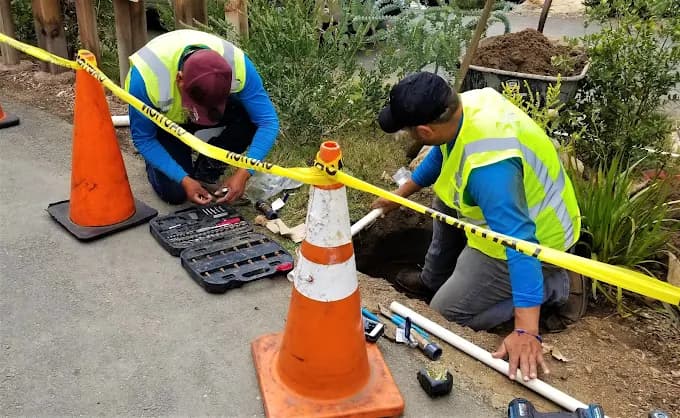
Unpermitted plumbing rarely causes trouble in the first year. It causes trouble when you sell, refinance, or file a claim. On O'ahu, permits are pulled through the City and County of Honolulu's Department of Planning and Permitting, and the record of what was permitted at your address outlives everyone involved in the job. A buyer's inspector finds work that does not match the permit history, and the sale stalls while it gets resolved — which can mean opening finished walls, having the work redone to code by a licensed contractor, and paying for both. Homeowners in that position frequently pay more for the correction than the original licensed quote they turned down.
There is also a consumer protection you forfeit outright. Hawai'i maintains a Contractors Recovery Fund under HRS 444-26 that can reimburse a homeowner harmed by a contractor's conduct, currently capped at $12,500 per contract. It applies only to duly licensed contractors — and recovery is not available where the license was suspended, revoked, or inactive. Hire someone unlicensed and that door is closed before you walk through it. Your only remaining option is to pursue an individual privately, which assumes you can find them and that there is something to collect.
The penalties fall on the contractor, not on you, and they do not make you whole. Hawai'i raised the monetary sanction for unlicensed contracting to $2,500 for a first offense and $3,500 for a second. That is a cost of doing business for someone operating outside the system, and none of it repairs your bathroom. The protection is not in the enforcement after the fact — it is in the two minutes you spend on the license search beforehand.
Hiring a Plumbing Company You Can Actually Verify
The whole check comes down to four questions asked before work starts. What is your contractor license number? Can I see certificates for liability and workers' compensation? Will this job be permitted, and who pulls it? And can I have the scope and price in writing? A legitimate company answers all four without hesitation, because it answers them every week. Anyone who treats those questions as an insult has just saved you the trouble of finding out the hard way.
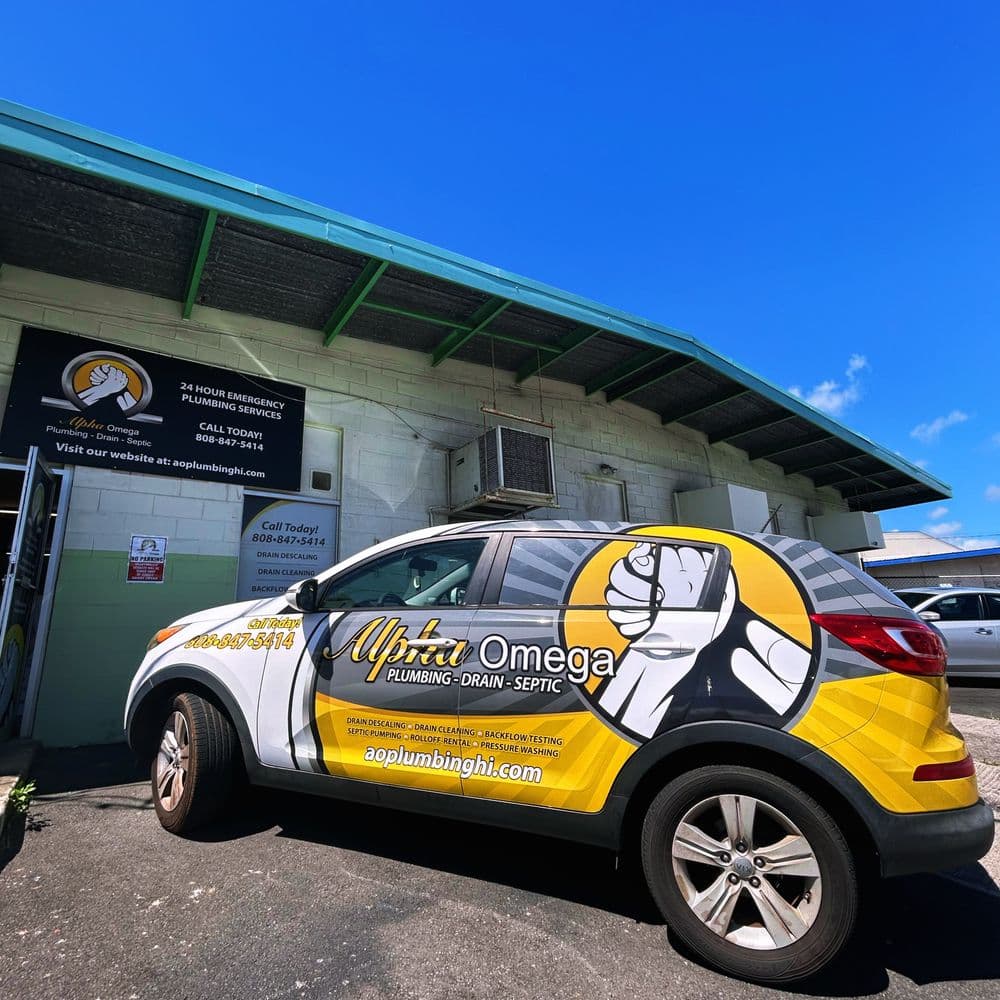
Alpha Omega Plumbing has worked across O'ahu since 2014 — Honolulu, Kailua, Kāne'ohe, Pearl City, Mililani and the rest of the island — and we are licensed and insured in the State of Hawai'i. Ask us for our credentials on any visit and look us up in the state database while we are standing there. For a free estimate, or if you want a second opinion on a bid that feels wrong, call (808) 847-5414. If something has already failed and it cannot wait, our 24/7 emergency plumber crew answers around the clock.
Frequently Asked Questions
How do I check if a plumber is licensed in Hawaii?
Search the free state database at mypvl.dcca.hawaii.gov by business name, personal name, or license number, and confirm the status is active with no disciplinary action. Make sure the name attached to the license matches the name on your estimate. Alpha Omega Plumbing is licensed and insured in the State of Hawai'i — call (808) 847-5414 and ask for our credentials any time.
How much more does a licensed plumber cost in Hawaii?
A licensed bid is usually higher up front because it carries insurance, permits, code-compliant materials and a warranty, and Hawai'i labor and shipping costs sit above mainland rates regardless. The gap almost always closes the first time something needs correcting or a buyer's inspector reviews the permit history. Alpha Omega Plumbing gives free written estimates at (808) 847-5414.
Do I need a permit for plumbing work on O'ahu?
Many plumbing jobs on O'ahu do — permits are issued by the City and County of Honolulu's Department of Planning and Permitting, and the record stays attached to your address permanently. Repairs like clearing a drain generally do not, while re-piping, relocating fixtures, water heater replacement and sewer or gas line work commonly do. A licensed contractor will tell you which category your job falls into and pull the permit as part of the work.
Is it okay to hire an unlicensed handyman for a small plumbing job?
Hawai'i's $1,500 handyman exemption does not cover plumbing work or anything requiring a building permit, so a small job is not the exception people assume it is. Tightening a supply line or swapping a washer is homeowner territory; anything touching a gas line, a water heater, a sewer lateral or a pipe inside a wall is not. When you are unsure, call Alpha Omega Plumbing at (808) 847-5414 and describe it — we will tell you straight whether it needs us.
Learn more about our About Alpha Omega Plumbing services on Oʻahu
View Service →Alpha Omega Plumbing Inc
Serving all of O'ahu since 2014.

Need a Plumber on O'ahu?
Insured and available 24/7 for emergencies across the island.