
Burst Pipe? How to Shut Off Your Water and Limit the Damage Fast
July 2, 2026 · Alpha Omega Plumbing Inc
A burst pipe is one of the few household emergencies that gets dramatically worse with every minute you wait. Water can push out of a failed line at gallons per minute, and by the time you've found a bucket it's already under the baseboards and into the drywall. The single most important thing to know isn't how to fix the pipe — it's how to stop the water and protect your home while help is on the way. This guide walks you through exactly what to do, in order, the moment you discover a leak, and when to bring in a 24/7 emergency plumber. If you're in the middle of it right now, call Alpha Omega Plumbing at (808) 847-5414 and we'll talk you through it while a technician heads your way.
Shut Off Your Water Supply First — Here's How
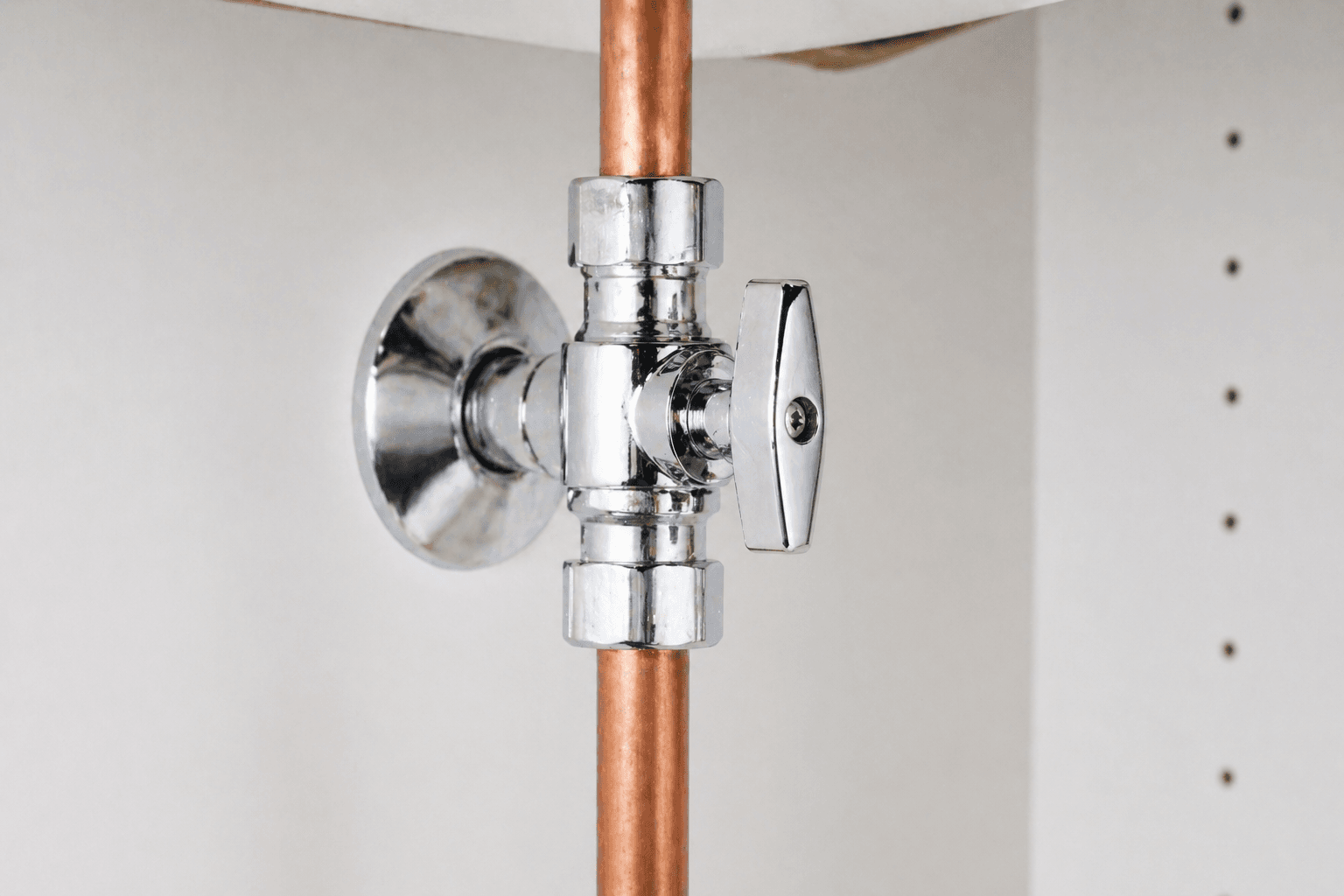
Before you mop a single drop, cut the water off at the source. If the leak is isolated to one fixture — a toilet, a sink, a washing machine — look for the small oval or football-shaped valve on the supply line right behind or beneath it and turn it clockwise until it stops. That alone will halt most under-sink and toilet failures without touching the rest of the house.
For a pipe that's failed inside a wall, under the slab, or anywhere you can't trace to a single fixture, go straight to your home's main shut-off valve. In most O'ahu homes it sits where the water line enters the house — often on an exterior wall, near the water heater, in a garage, or in a covered box near the front of the property by the meter. Turn it fully clockwise (righty-tighty). If it's a lever-style valve, rotate it a quarter turn so it sits crosswise to the pipe.
The time to find that valve is not during an emergency. Walk your property this week, locate the main shut-off, and make sure it actually turns — older gate valves seize up with age and Hawai'i's humidity, and a valve that won't budge when you need it is worse than useless. If yours is frozen or corroded, have it replaced now so it's ready the day something lets go. Note the location and show everyone in the household where it is.
Contain the Flooding and Protect Your Home
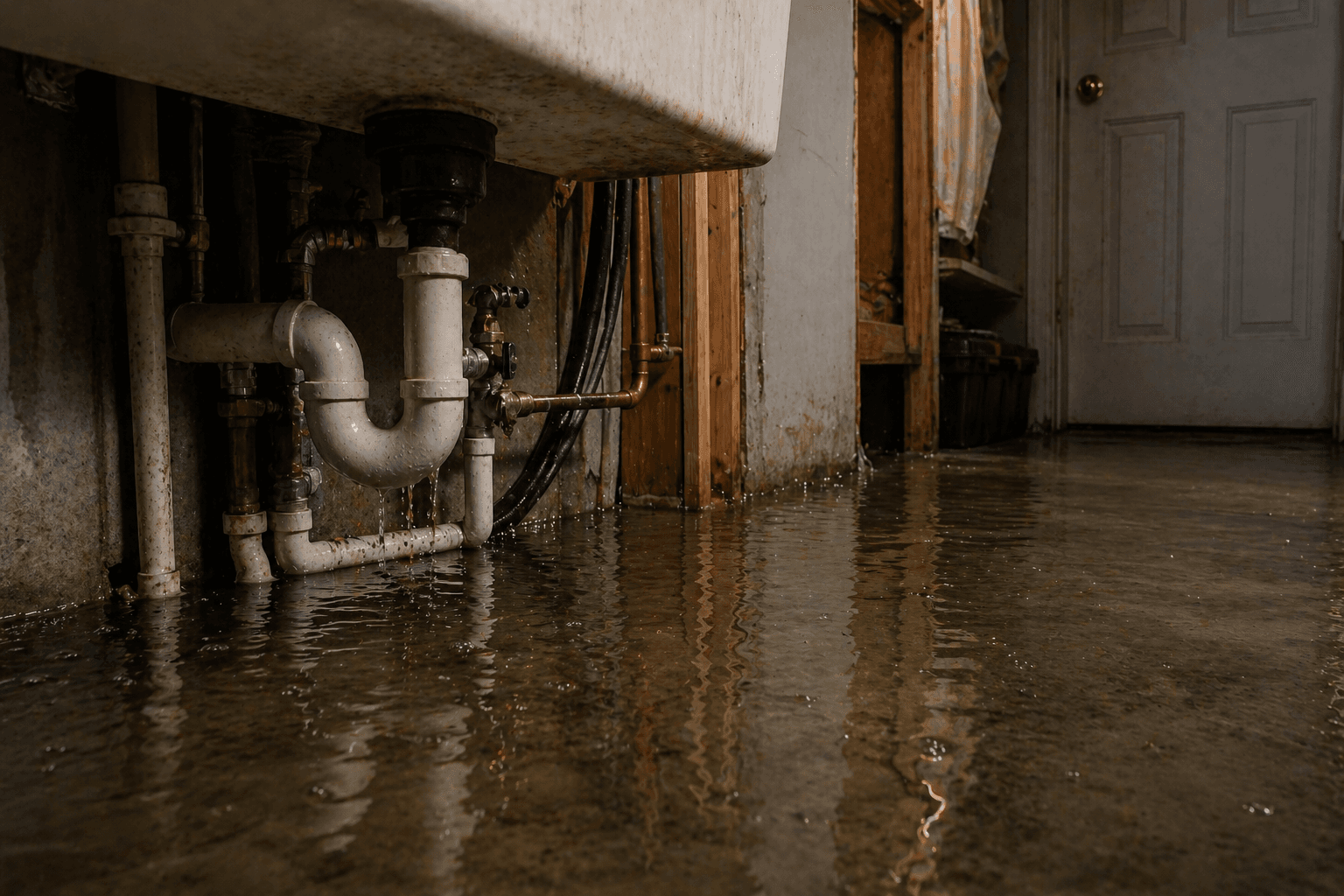
With the water off, your next job is damage control, and speed still matters — standing water and saturated materials start breeding mold within 24 to 48 hours, and O'ahu's warm, humid climate accelerates that clock. Move furniture, rugs, electronics, and anything of value out of the wet zone first, then start removing standing water with towels, a mop, or a wet/dry shop vac if you have one.
If water is anywhere near outlets, light fixtures, or your electrical panel, shut off power to the affected area at the breaker before you wade in — never stand in water near live electricity. Open windows and run fans to get air moving across wet surfaces, and pull back baseboards or lift the edge of soaked carpet so the cavity underneath can dry instead of trapping moisture against the framing.
Document everything before you clean it all up. Photograph and video the burst, the standing water, and every damaged item and surface — your homeowner's insurance will want that record, and a thorough set of photos taken in the first hour is far more convincing than a tidied-up room the next day. Once the source is stopped and the scene is documented, you've done the hard part; the repair is what the professionals are for.
What Makes Pipes Fail on O'ahu
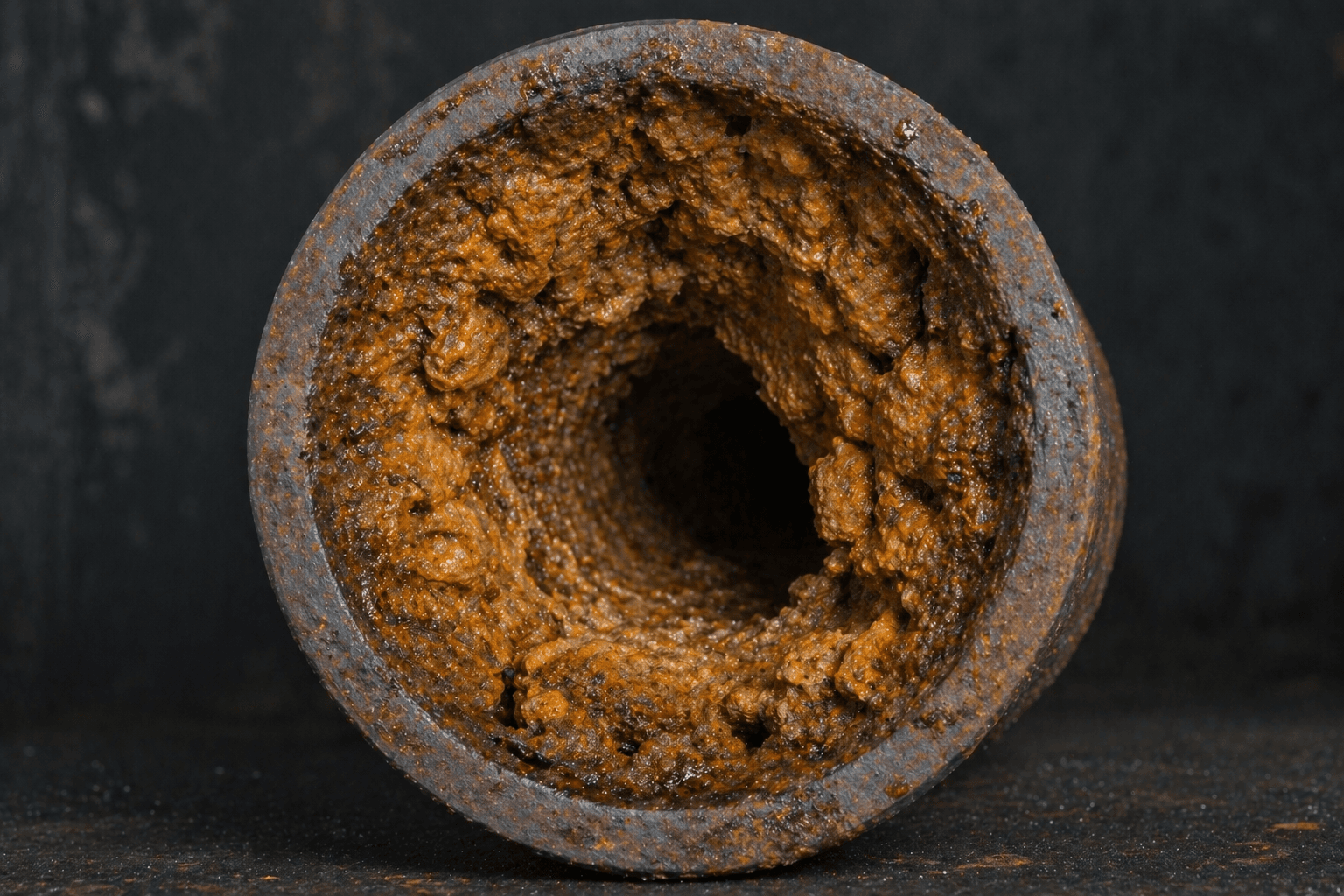
Understanding why lines rupture helps you catch the next one before it floods the house. The biggest culprit in island homes is age and corrosion. Many O'ahu houses still run original galvanized steel or older copper plumbing, and decades of mineral-heavy water combined with salt air slowly eat the pipe from the inside out until the wall gets too thin to hold pressure. That's the same corrosion you see building inside old fittings — invisible until the day it gives way.
High or fluctuating water pressure is the second major cause. Pressure above roughly 80 psi stresses every joint and fixture in the system, and repeated spikes fatigue the weakest point until it splits. Physical damage plays a role too — a drywall screw driven into a hidden line during a renovation, or roots and shifting soil stressing an underground run. Not every failure announces itself with a burst, either: a slow drip inside a wall can do quiet damage for months, which is why professional leak detection pays for itself when your water bill climbs for no reason.
The takeaway is that most pipe failures are the end of a long, preventable decline. If your home has aging plumbing, discolored or rusty water, banging pipes, or pressure that swings from a trickle to a blast, those are the warning signs to act on. Addressing them through routine general plumbing service is far cheaper than the flood-and-repair cycle that comes from waiting for a line to blow.
When to Call an Emergency Plumber
A shut-off valve buys you time — it doesn't fix the pipe. Once the water is stopped, any burst line inside a wall, under the slab, or in your main supply needs a professional plumber to repair correctly, and the sooner that happens the sooner you can turn your water back on and get your household running again. Trying to patch a pressurized line yourself usually turns a contained problem back into an active leak.
Call for emergency help right away if you can't find or turn your main shut-off, if water is reaching electrical systems, if the leak is sewage or hot water, or if you simply can't stop the flow. These aren't situations to sleep on overnight — the longer water sits, the deeper the damage runs into framing, insulation, and flooring, and the bigger the eventual bill.
Alpha Omega Plumbing has handled burst-pipe emergencies across O'ahu since 2014, and our line is answered 24 hours a day, 7 days a week — because pipes don't wait for business hours. If you're dealing with a burst pipe or you're not sure whether what you're seeing counts as an emergency, call (808) 847-5414 now and speak with a real plumber who can dispatch help fast and walk you through protecting your home until we arrive.
Frequently Asked Questions
Where is the main water shut-off valve in a Hawai'i home?
It's usually where the water line enters the house — often on an exterior wall, near the water heater, in the garage, or in a covered box near the meter at the front of the property. Turn it fully clockwise to stop the water. Find and test yours before an emergency so you're not searching while the house floods.
How much does it cost to repair a burst pipe on O'ahu?
Cost depends on where the pipe failed, how much water damage occurred, and whether the line is exposed or behind a wall or slab. Repairs in Hawai'i run higher than mainland averages because of local labor and material costs. Alpha Omega Plumbing gives a clear estimate before any work — call (808) 847-5414 for a free assessment.
Why do pipes burst so often in older O'ahu homes?
Many island homes still have original galvanized or older copper plumbing, and decades of mineral-rich water plus salt air corrode those pipes from the inside until the wall gets too thin to hold pressure. High water pressure and humidity speed the process, which is why aging homes see more failures.
Should I try to fix a burst pipe myself or call a plumber?
Shutting off the water and containing the mess are things you should do yourself immediately. The actual repair of a pressurized or hidden line should be left to a professional plumber so it's fixed right the first time. For any burst inside a wall, slab, or main line, call Alpha Omega Plumbing at (808) 847-5414.
Learn more about our 24/7 Emergency Plumber services on Oʻahu
24/7 emergency plumber →Alpha Omega Plumbing Inc
Serving all of O'ahu since 2014.
More From the Blog
Need a Plumber on O'ahu?
Insured and available 24/7 for emergencies across the island.