
Septic Tank 101: How Your System Works and How to Keep It Healthy
June 15, 2026 · Alpha Omega Plumbing Inc
If your O'ahu home isn't connected to the municipal sewer, an on-site system quietly handles every drop of wastewater your household produces — and most homeowners never think about it until something goes wrong. At its simplest, a septic tank is a buried, watertight container where solids settle out and natural bacteria begin breaking down waste, while the liquid that's left flows out to a drain field to be filtered through the soil. Understand that basic cycle and you'll know exactly how to keep the whole system running for decades instead of replacing it for tens of thousands of dollars. This guide walks you through how the system works, the warning signs of trouble, and the simple habits that protect it — and if you'd rather hand it to a pro, Alpha Omega Plumbing is one call away at (808) 847-5414.
How a Septic System Treats Your Home's Wastewater
Everything starts at the tank. When you flush a toilet, run the dishwasher, or drain the tub, that water travels through a single main line into a buried, watertight tank — typically 1,000 to 1,500 gallons for a family home. Inside, gravity does the first round of work: heavy solids sink to the bottom and form a sludge layer, while grease and lighter material float to the top as scum. The relatively clear liquid in the middle, called effluent, is what moves on to the next stage.
While the layers separate, anaerobic bacteria living in the tank get busy digesting the solids. This biological breakdown is the heart of the whole system, which is why what you put down the drain matters so much — harsh chemicals, bleach, and antibacterial cleaners in large amounts can kill the bacteria your tank depends on. A healthy septic system is really a small, self-contained ecosystem, and your job as a homeowner is mostly to avoid disrupting it.
From the tank, effluent flows out to the drain field (also called a leach field) — a network of perforated pipes buried in gravel-filled trenches. There, the liquid slowly percolates down through the soil, which acts as a natural filter that removes remaining bacteria and nutrients before the water rejoins the groundwater. On O'ahu, where many homes sit on older lots with limited soil depth, that drain field is the most sensitive and expensive part of the system to repair, so protecting it is the whole game.
Warning Signs Your Drain Field Is in Trouble
A failing system rarely fails all at once — it sends signals first, and catching them early is the difference between a routine service call and a full drain field replacement. The most common red flag is slow drains throughout the house. If one sink is sluggish, you probably have a local clog; if every toilet, tub, and sink drains slowly at the same time, the problem is likely back at the tank or field.
Trust your nose and your eyes outside, too. A persistent sewage odor near the tank or drain field, soggy or unusually spongy ground when there hasn't been rain, or a patch of grass that's suddenly greener and lusher than the rest of the yard all point to effluent surfacing where it shouldn't. Gurgling sounds from your plumbing and, in the worst case, sewage backing up into the lowest drains in the house are signs the system is overwhelmed and needs attention immediately.
These symptoms move fast once they start, especially during O'ahu's wetter winter months when saturated ground gives effluent nowhere to go. If you notice any of them, don't wait — call a licensed plumber to diagnose the cause before a manageable issue becomes a backup inside your home. Alpha Omega Plumbing offers honest assessments across the island at (808) 847-5414.
Everyday Maintenance Habits That Protect Your O'ahu Home
Keeping a system healthy comes down to two simple ideas: watch what goes in, and don't overload it with water. In the kitchen, keep grease, oil, and coffee grounds out of the drain — they don't break down and they clog the inlet. In the bathroom, the only things that belong in the toilet are waste and toilet paper. So-called 'flushable' wipes, paper towels, feminine products, and cat litter do not break down in a tank and are a leading cause of clogs and premature pumping.
Go easy on the chemicals. Pouring bleach, drain cleaners, and large volumes of antibacterial products down the drain kills the bacteria doing all the digestive work, leaving solids to accumulate faster. You don't need additives or 'septic boosters' either — a normally used system maintains its own bacterial balance just fine.
Managing water use is the other half. Spreading out laundry loads instead of running six in one day, fixing running toilets and dripping faucets promptly, and installing efficient fixtures all reduce the flood of water hitting the tank, giving solids time to settle properly. Finally, protect the drain field physically: never park vehicles, build structures, or plant deep-rooted trees over it, because compaction and invading roots are two of the fastest ways to destroy a field on a tight O'ahu lot.
When to Schedule Professional Tank Pumping
Even a perfectly maintained system needs periodic pumping, because the bacteria can't break down everything — that bottom sludge layer keeps building no matter how careful you are. For most O'ahu households, having the tank pumped every three to five years keeps solids from reaching the outlet and flowing out to clog the drain field. Larger families and smaller tanks land at the shorter end of that range; a smaller household with a big tank can often go longer. A quick professional inspection tells you exactly where your sludge level stands.
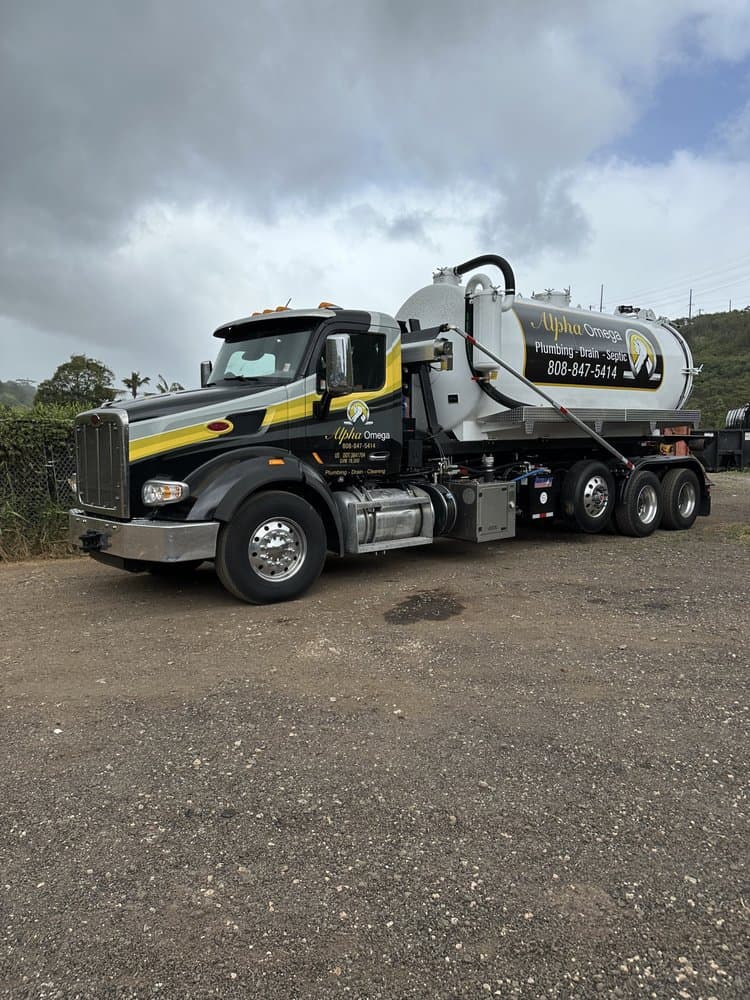
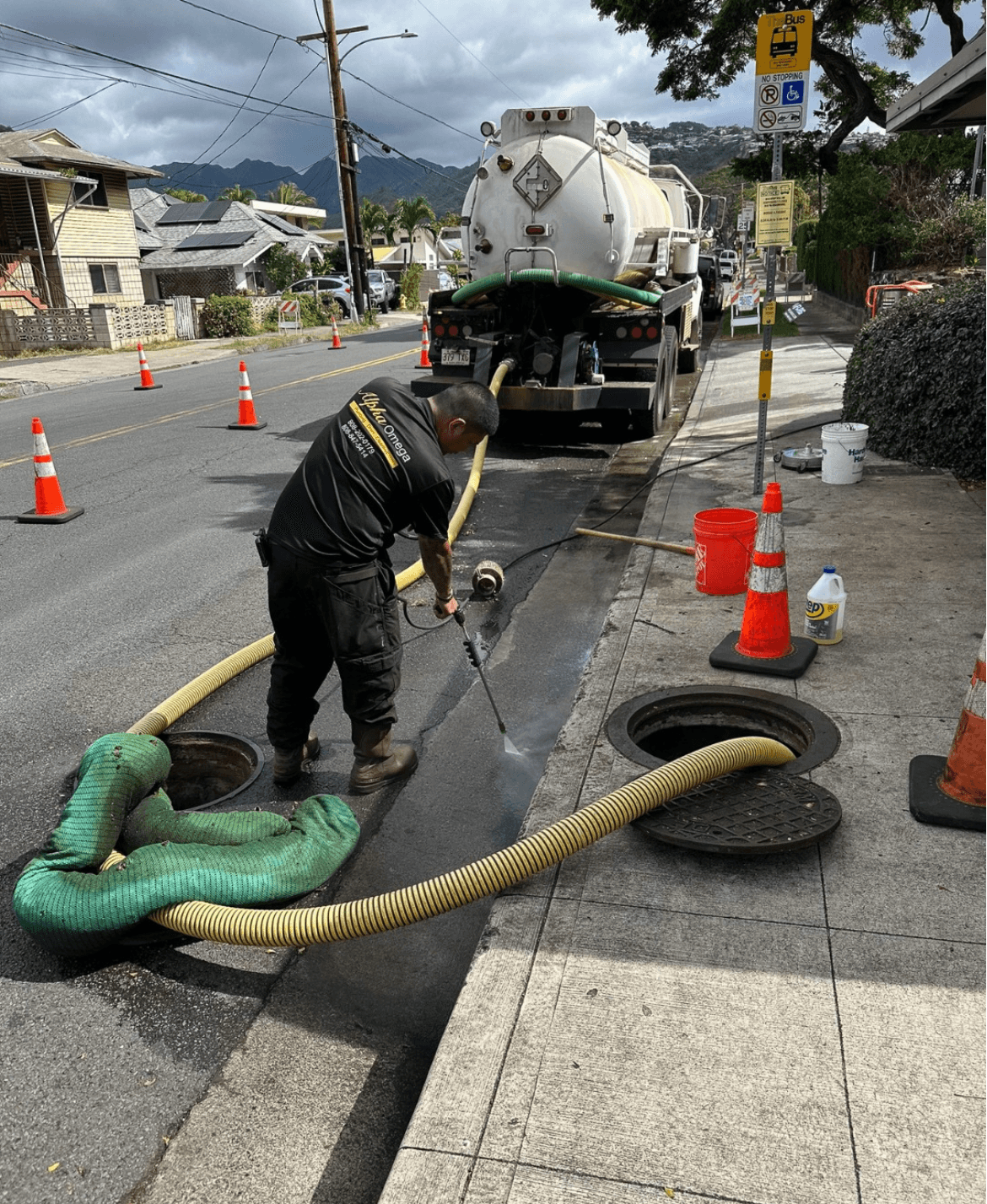
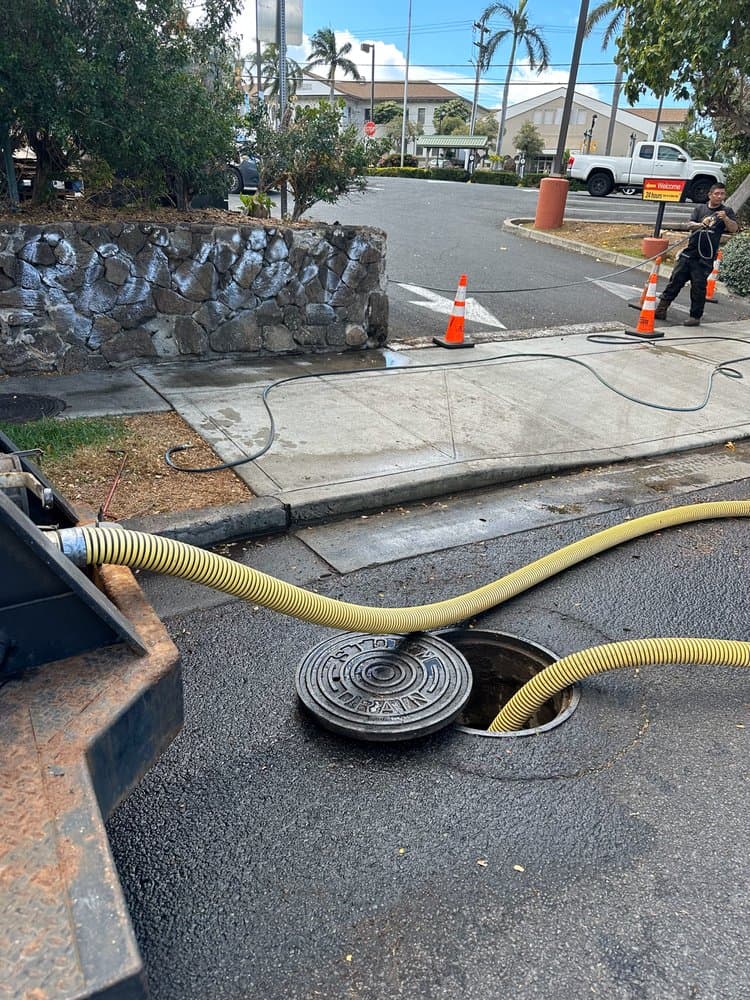
Pumping is not a DIY job — it requires the right equipment, and septic waste is regulated and must be hauled to an approved facility. Our team handles septic and cesspool pumping across O'ahu, and we'll also check the tank's baffles and inspect for cracks while we're there, so small structural problems get caught before they turn into a failure. It's worth noting that Hawai'i is phasing out cesspools statewide, so if your property still has one, a conversation about converting to a proper septic system or sewer connection is worth having sooner rather than later.
The takeaway is simple: a septic system rewards a little attention and punishes neglect, and routine pumping is the single most important thing you can do to avoid a five-figure repair. If it's been more than a few years since your last service, or you've spotted any of the warning signs above, call Alpha Omega Plumbing at (808) 847-5414. We provide free estimates and dependable septic service everywhere on O'ahu — from Honolulu and Hawai'i Kai to Kāne'ohe, Waimānalo, and the North Shore.
Frequently Asked Questions
How often should a septic tank be pumped in Hawai'i?
Most O'ahu homes should have the septic tank pumped every three to five years, though larger households or smaller tanks may need it sooner. A quick inspection of the sludge level tells you for certain. Alpha Omega Plumbing can check and pump your tank — call (808) 847-5414 for a free estimate.
How much does septic tank pumping cost on O'ahu?
Septic pumping in Hawai'i generally runs higher than on the mainland because of disposal and hauling costs, with most residential jobs falling in a few-hundred-dollar range depending on tank size and access. For an exact quote on your property, call Alpha Omega Plumbing at (808) 847-5414 for a free estimate.
What's the difference between a septic tank and a cesspool?
A septic tank separates solids and sends treated liquid to a drain field for filtration through the soil, while an older cesspool simply discharges waste straight into the ground with no treatment. Hawai'i is phasing out cesspools statewide, so many O'ahu homeowners are converting to septic or sewer systems.
What should I never flush into a septic system?
Keep out grease, oil, coffee grounds, 'flushable' wipes, paper towels, feminine products, cat litter, and large amounts of bleach or harsh chemicals — these either clog the system or kill the bacteria it relies on. Only waste and toilet paper should go down the drain. Questions? Call (808) 847-5414.
Learn more about our Septic System Services services on Oʻahu
View Service →Alpha Omega Plumbing Inc
Licensed plumbers serving all of O'ahu since 2014.
More From the Blog
Need a Plumber on O'ahu?
Licensed, insured, and available 24/7 for emergencies across the island.